Program Support for Archival Thinking: Artist Archive Symposium at MoMA PS1
December 4, 2025
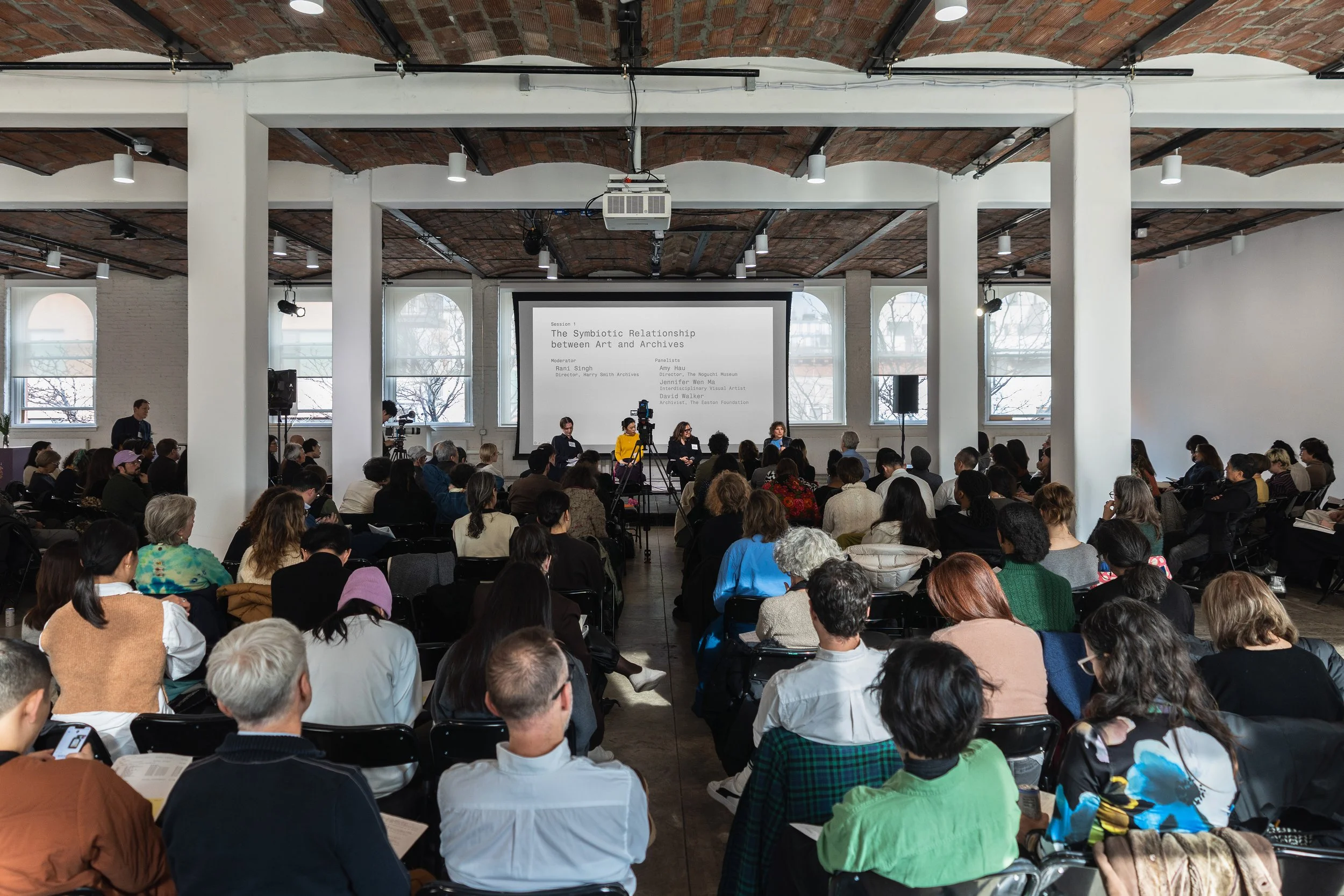
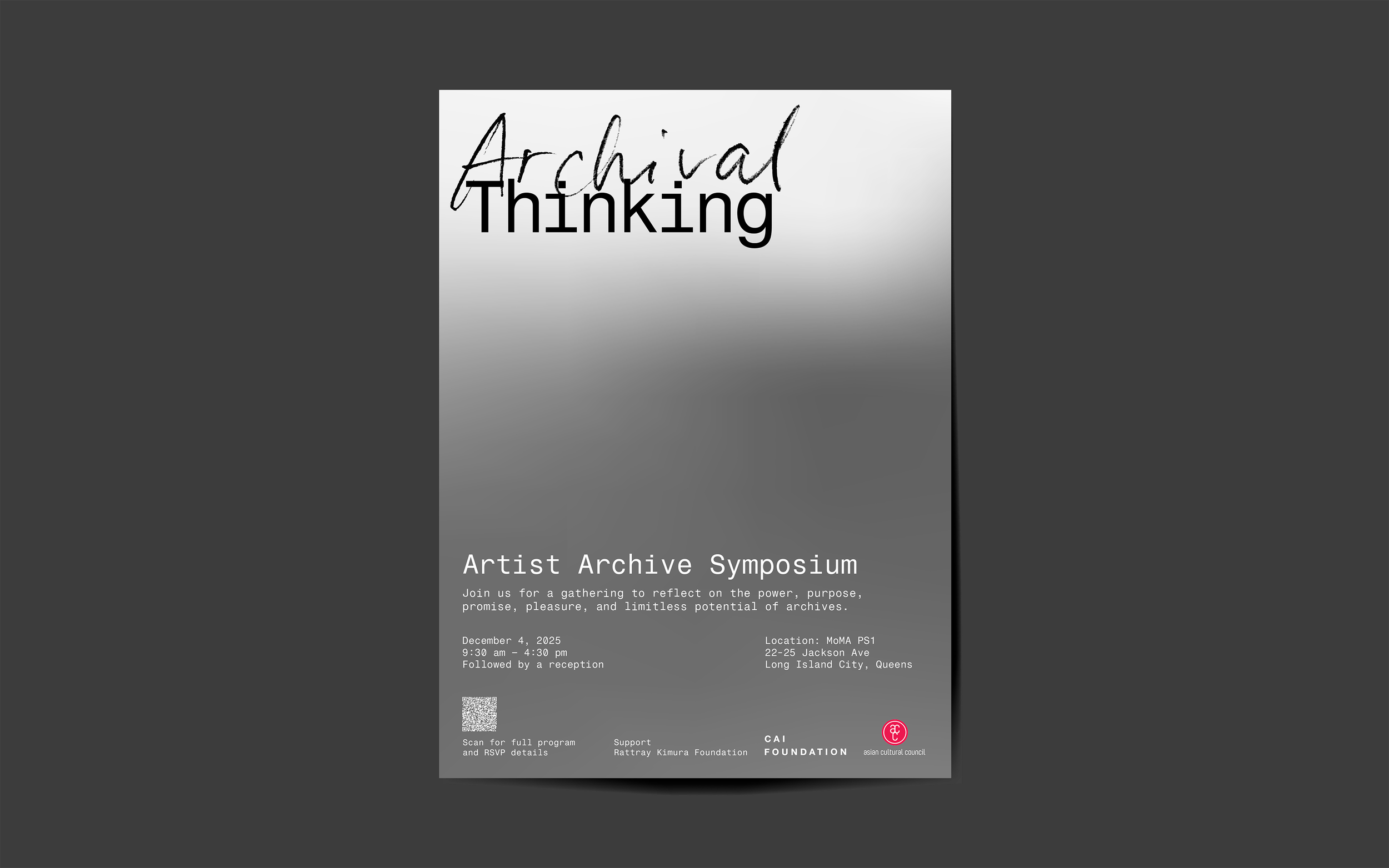
The inaugural Archival Thinking: Artist Archive Symposium was held on December 4, 2025 at MoMA PS1 in New York, jointly organized by Asian Cultural Council (ACC) and Cai Foundation, with the support from the Rattray Kimura Foundation. The symposium was a full-day event curated by Paul Holdengräber and featured two keynote speeches and three panel discussions. It drew nearly 200 attendees from across the fields of art, archives, and the humanities to explore the contemporary significance and future potential of the artist archive.
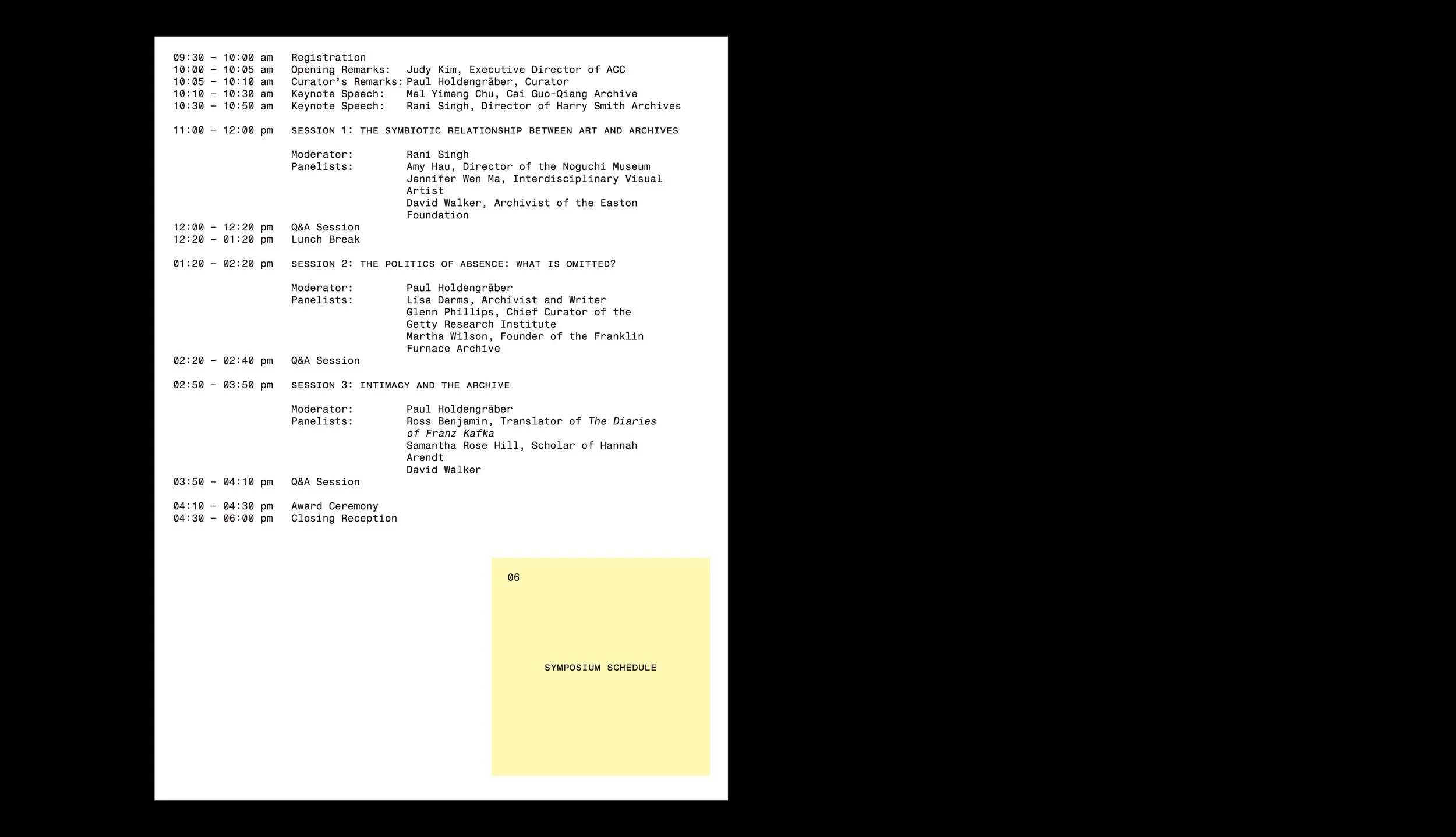
The three panel discussions are: “The Symbiotic Relationship Between Art and Archives”, “The Politics of Absence—What is Omitted?,” and “Intimacy and the Archive.” The program concluded with the Archival Contribution Award, established by Cai Foundation to the dedicated individual and organization recipient in the sphere of archive. This year’s recipients were Dr. Reiko Tomii (Individual) and Franklin Furnace (Organization).
The “Artist Archive Symposium” plans to be held biennially. The inaugural symposium initiated a conversation on archival thinking that will continue in future editions.
Program Highlights
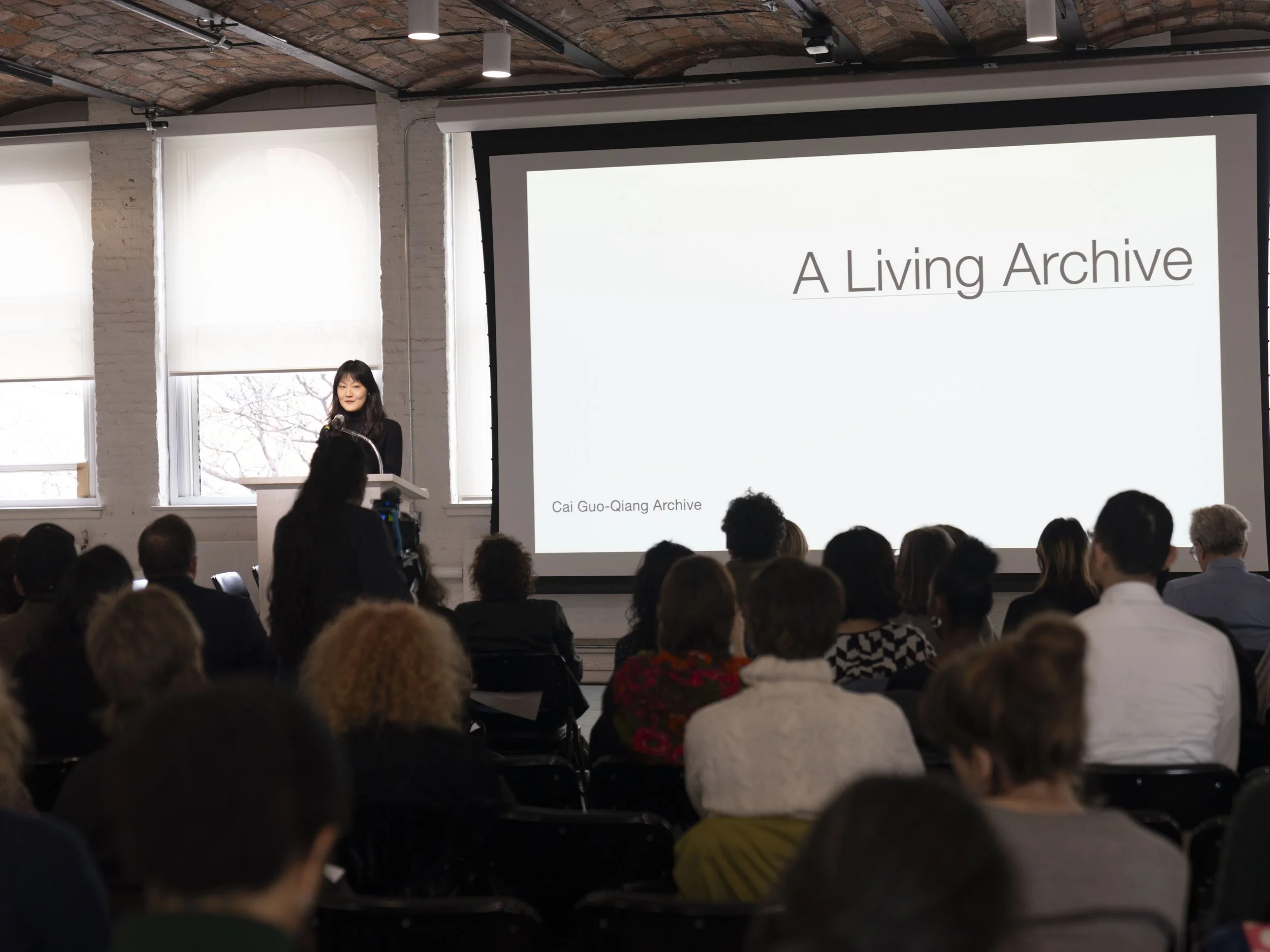
Photo by Wen-You Cai, courtesy Cai Studio
Keynote Speech 1 “A Living Archive”
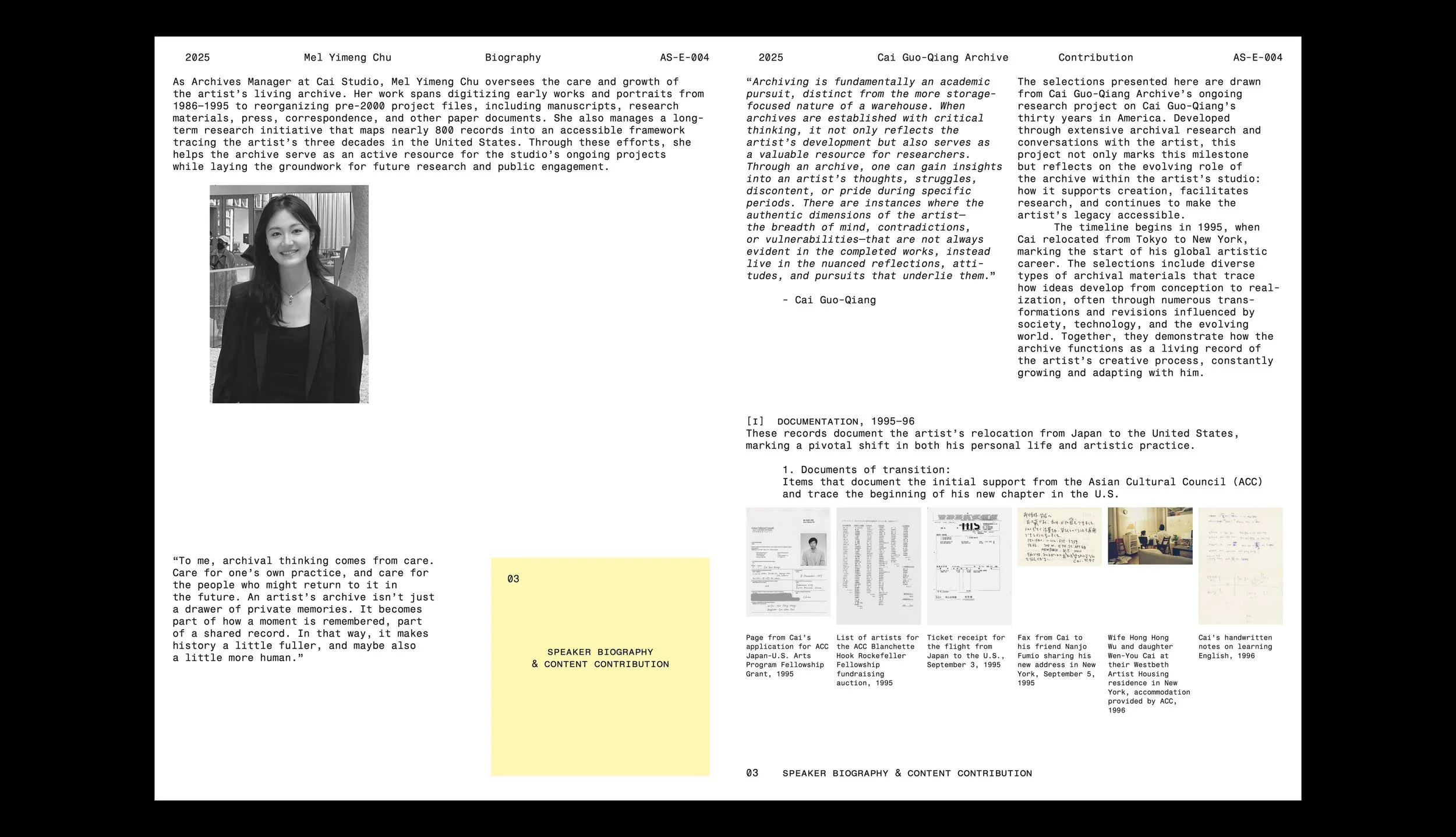
Speaker: Mel Yimeng Chu, Archives Manager of Cai Guo-Qiang Archive
“An artist’s archive isn’t just a drawer of private memories. It becomes part of how a moment is remembered, part of a shared record. In that way, it makes history a little fuller, and maybe also a little more human.” —Mel Chu
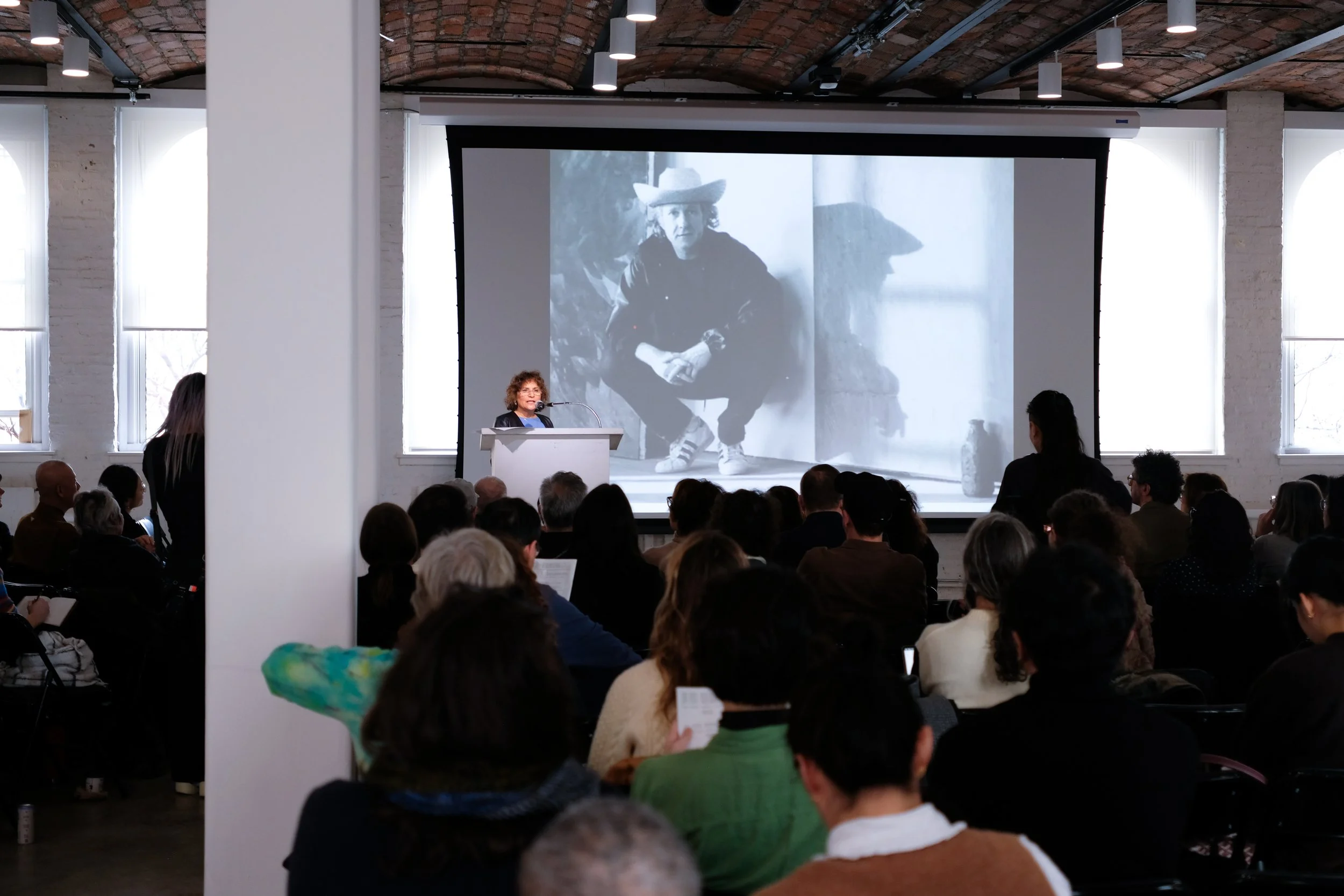
Photo by Jennifer Chen, courtesy Cai Studio
Keynote Speech 2
Speaker: Rani Singh, Director of the Harry Smith Archives
“Creating an archive is an ongoing process when the benefits from foresight and organization. It's best to preserve more rather than less. What seems an insignificant today may be a great scholarly interest in the future. Maintained and accessible archive enhances scholarly engagement, increases visibility and shapes the long term legacy of an artist.”—Rani Singh
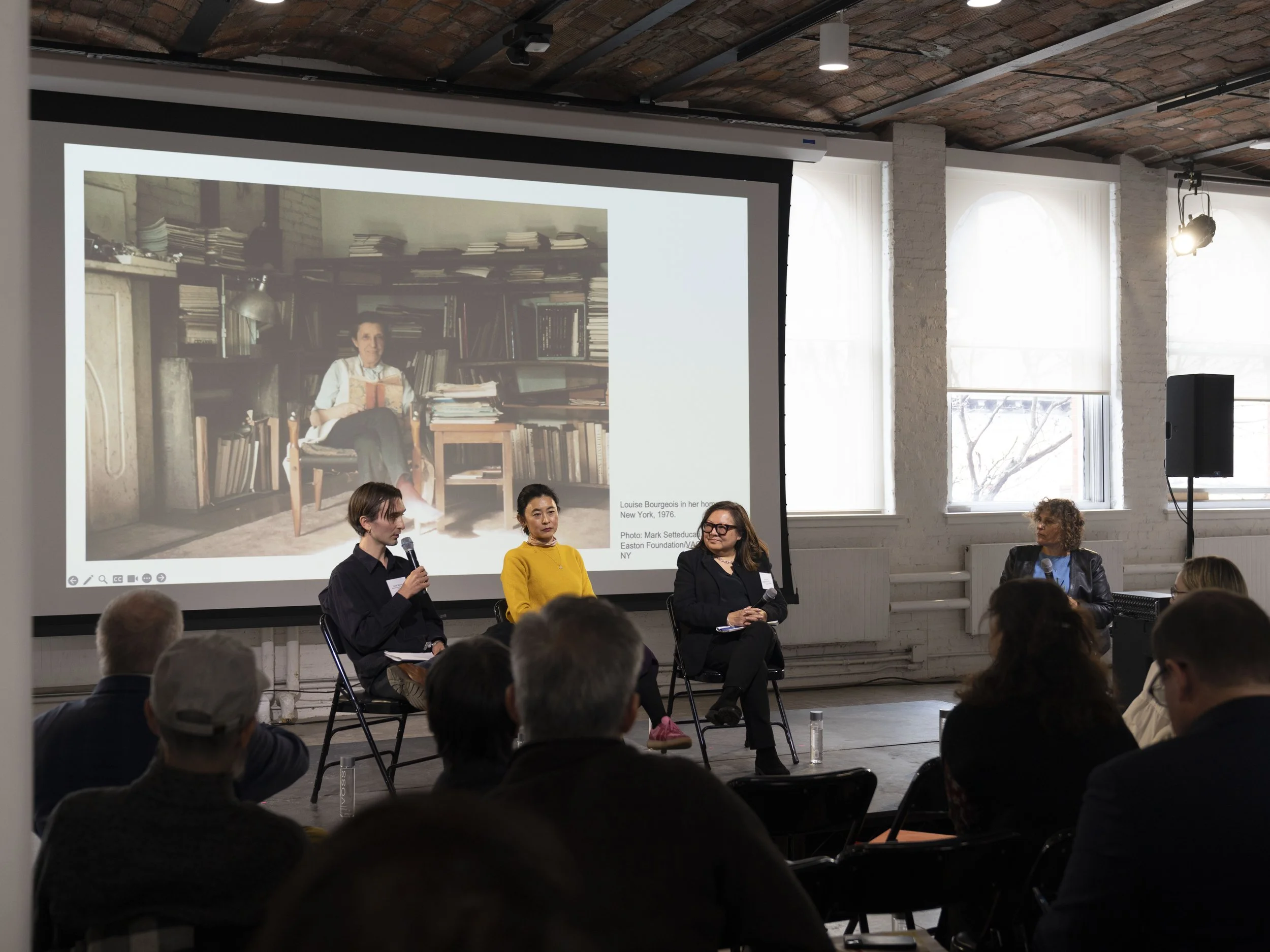
Photo by Wen-You Cai, courtesy Cai Studio
Session 1: The Symbiotic Relationship Between Art and Archives
Moderator (far right): Rani Singh, Director of Harry Smith Archives
Panelists (left to right):
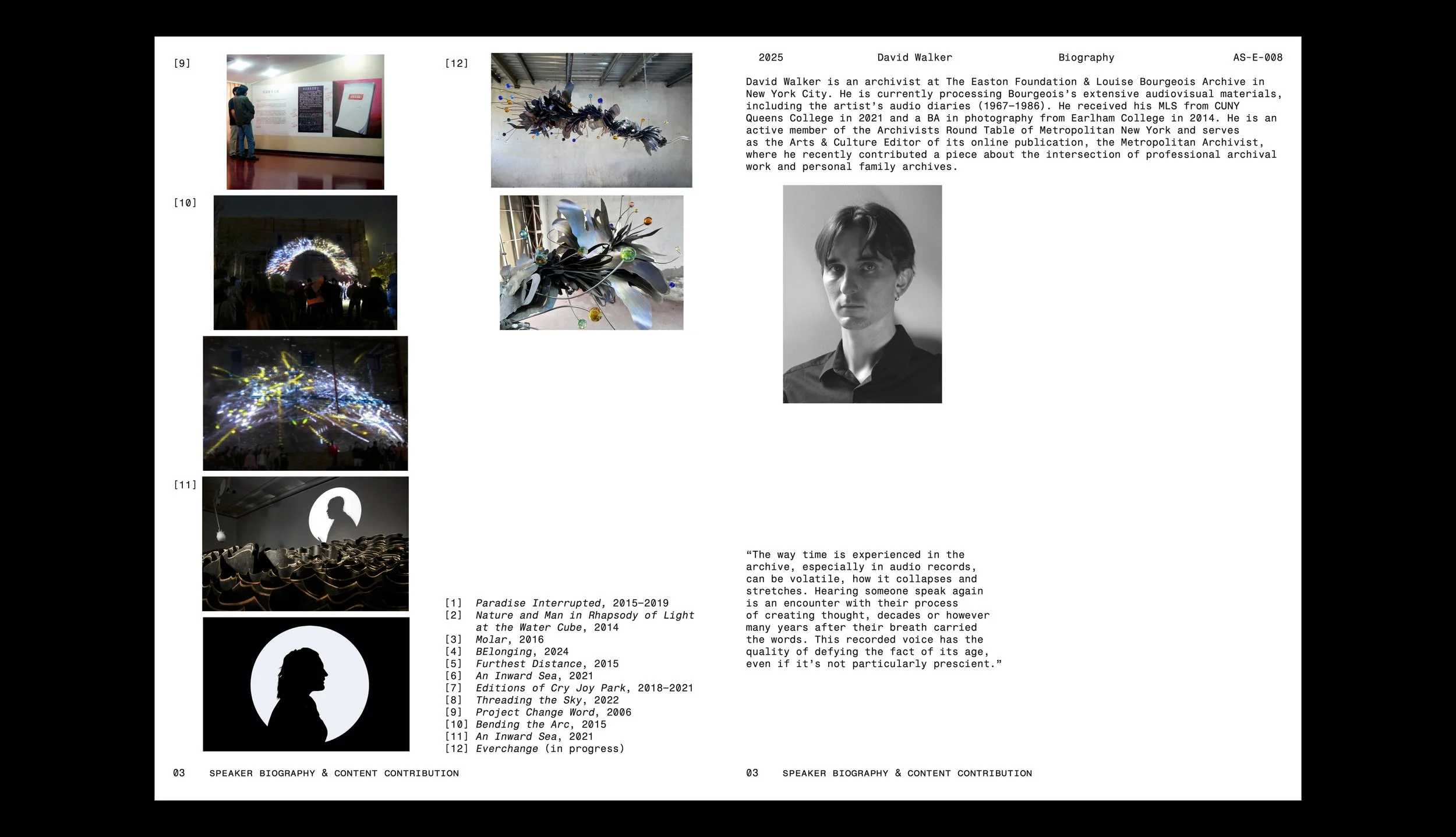
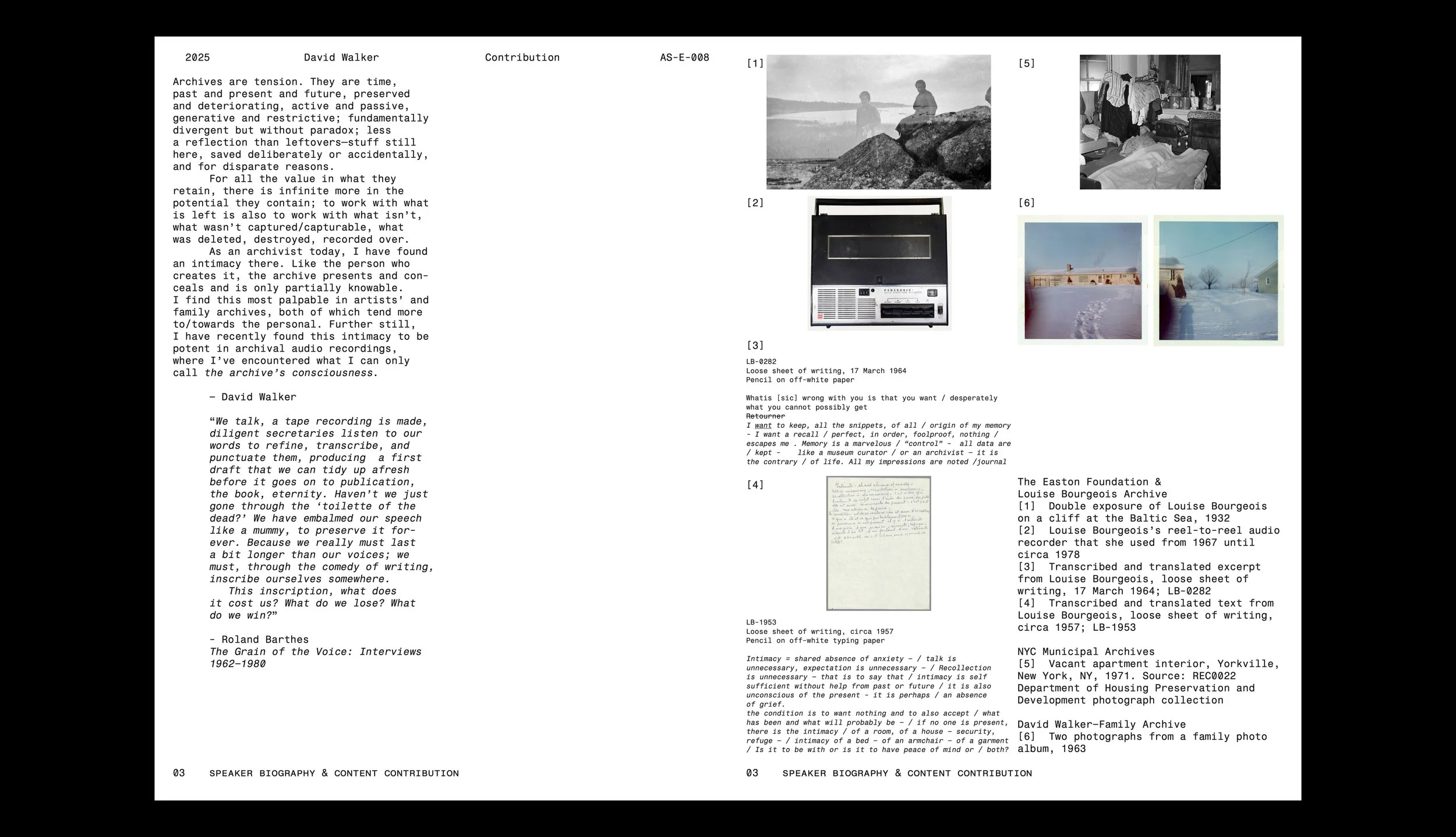
David Walker, Archivist at the Easton Foundation
Jennifer Wen Ma, Interdisciplinary Visual Artist
Amy Hau, Director of the Noguchi Museum
“It just sort of suggest this idea of more complicated nature that you can glimpse by being in the archive and seeing that the way work has talked about or curated is often inventing the meaning when the works done, but there's meaning invented while the works being made as well, which I think that this sort of demonstrates in a nice way.” —David Walker
“I just want to say that I will use that question as a prompt for living artists to think about what you want to preserve, to actively build your archive. What you want—you know you don't want a one way interpretation. … Most of us probably cannot keep everything stored in an archive. But what's essential so that people later on could look at your work, get a nuanced understanding of it.” —Jennifer Wen Ma
“I think that's what the archive does. It sort of produces an interpretation. It helps us understand where he was coming from, what his thought processes was. How he did the work. I hope that is what's conveyed through the work that we present digitally or through publications or through exhibitions.” —Amy Hau
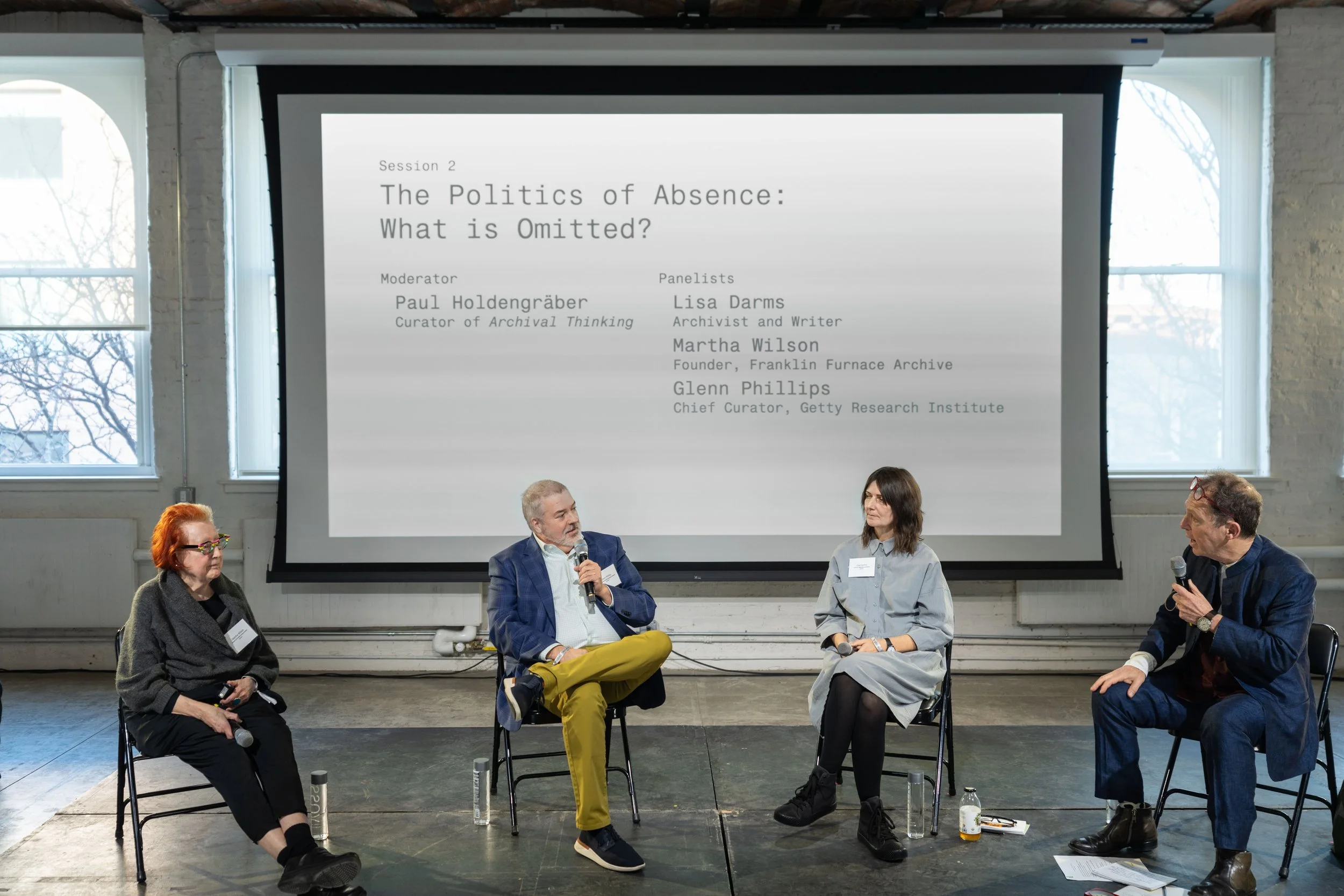
Photo by Mengjia Zhao, courtesy Cai Studio
Session 2: The Politics of Absence—What is Omitted?
Moderator (far right): Paul Holdengräber, Curator of Archival Thinking
Panelists (left to right):
Martha Wilson, Founder of Franklin Furnace Archive
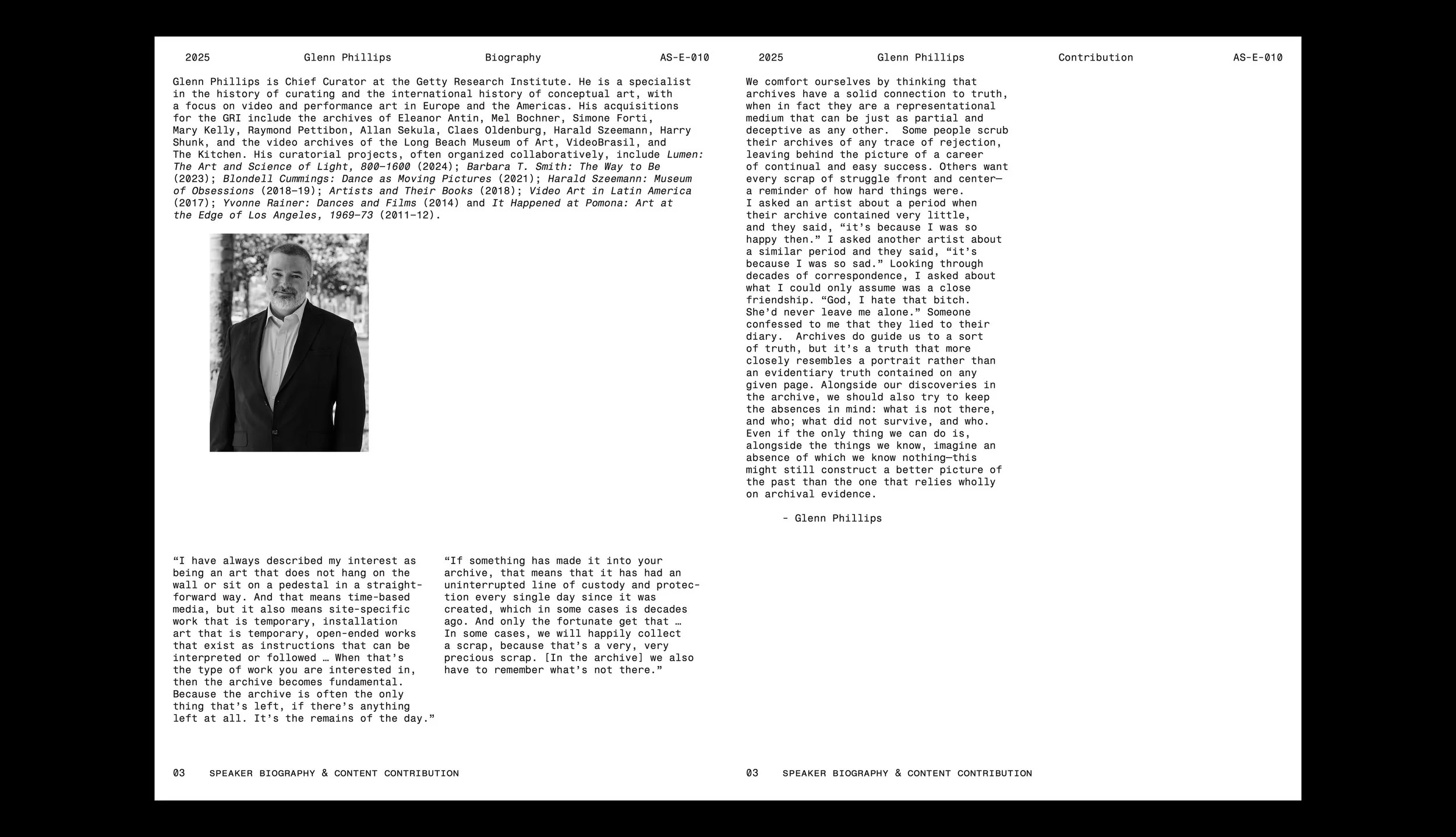
Glenn Phillips, Chief Curator of Getty Research Institute
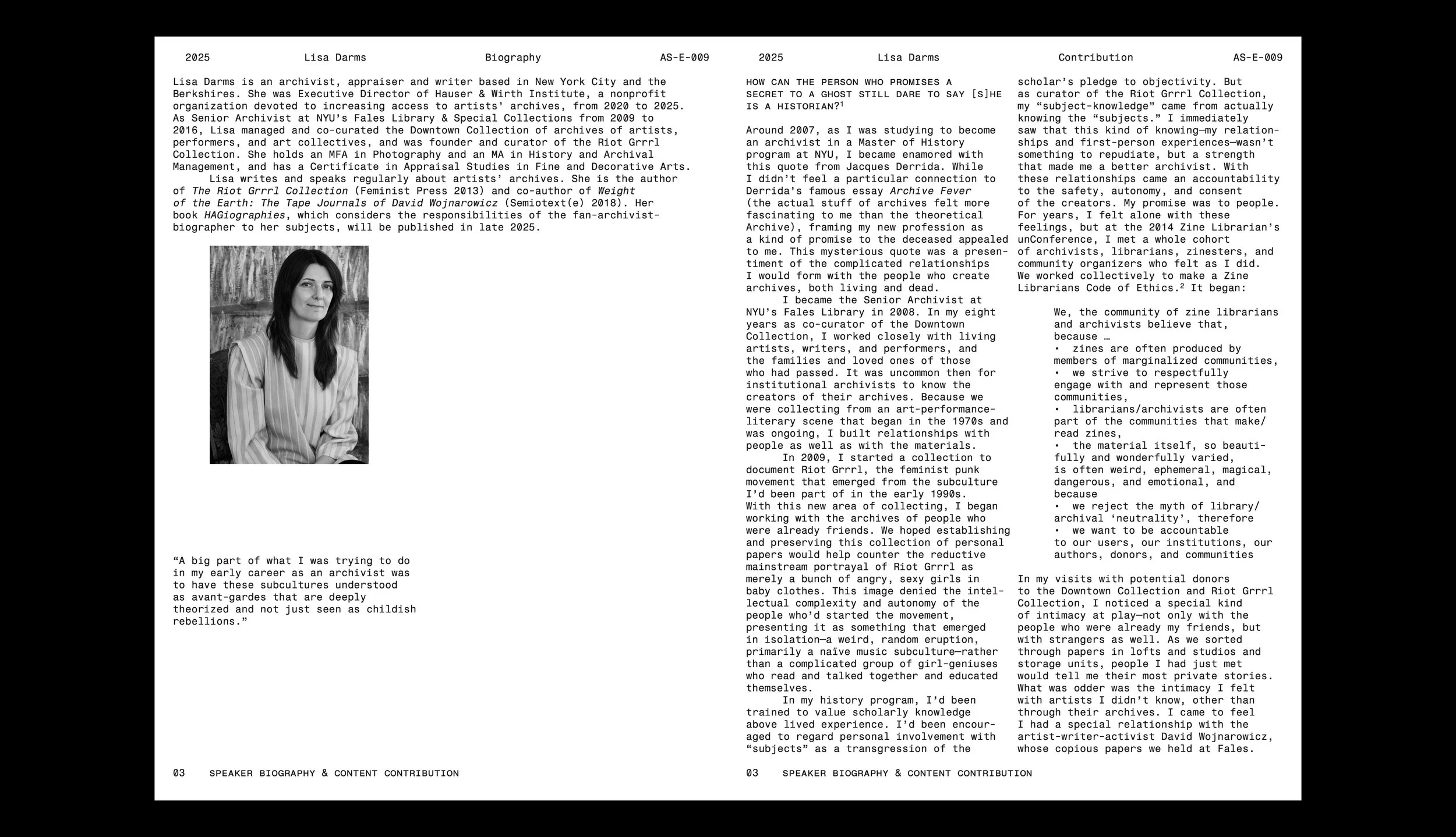
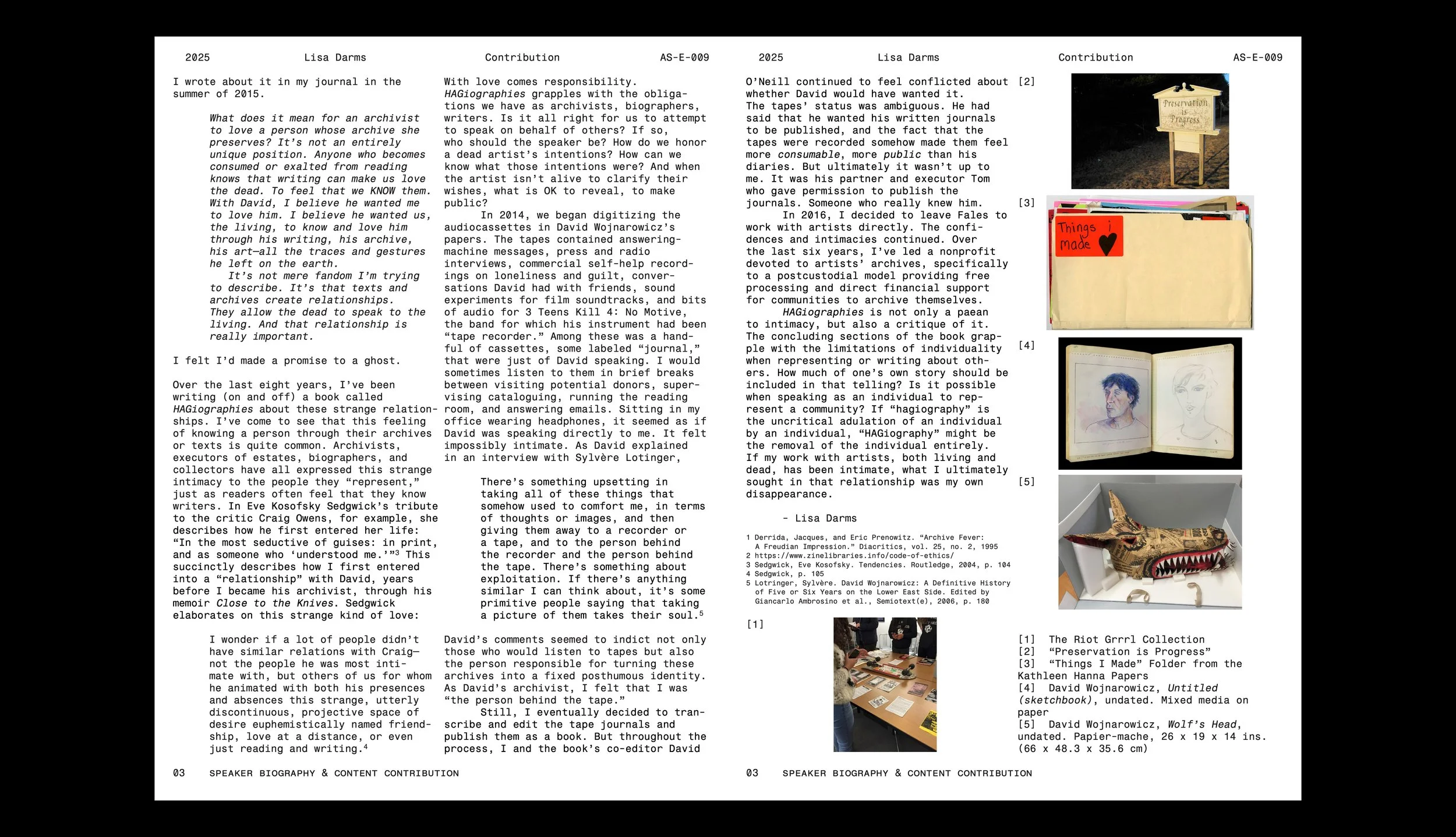
Lisa Darms, Archivist and Writer
“When you take a box like that, you pull them all out, you individually house them and wrap them and separate them and protect them—you have pre-murdered the object. You have pre-murdered the artwork under the guise of safety. Because never again can a person actually experience what that box was. You have dissected it. You've removed the experience, and that experience cannot be had. ” —Glenn Phillips
“We work so hard to preserve every little thing as a way to preserve the artist—but aren't there some cases where an absence is a more accurate representation of the artist’s disappearance?” —Lisa Darms
“I think, as I said, I was trying to figure out who's in there. Because my parents, my boyfriends, my teachers had influenced my thinking, but I didn't know what I thought about things…So the archive, for me, the diaries, are a way to track the internal processes that are going on. I'm finding out, too, as I'm writing it down.” —Martha Wilson
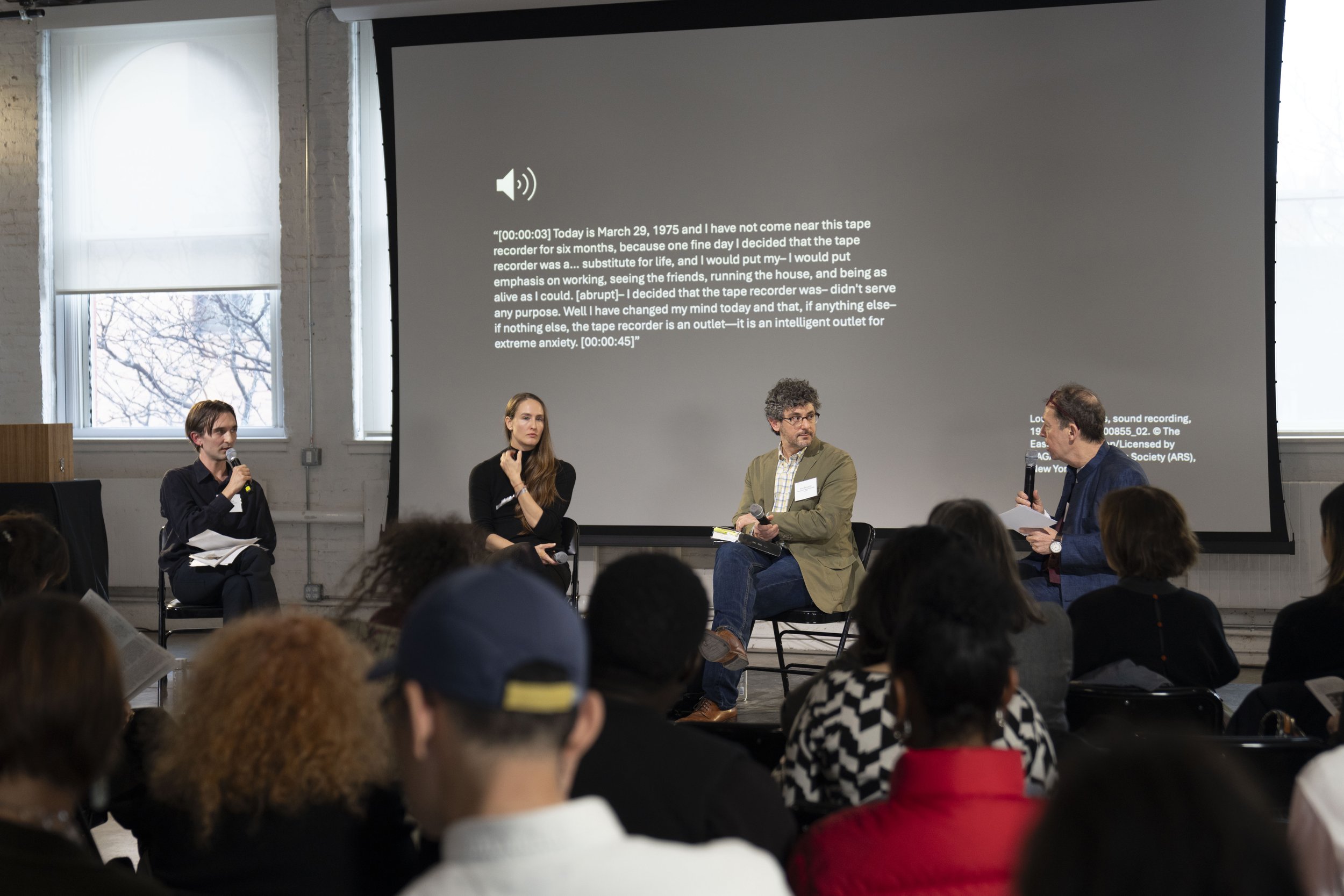
Photo by Wen-You Cai, courtesy Cai Studio
Session 3: Intimacy and the Archive
Moderator (far right): Paul Holdengräber, Curator of Archival Thinking
Panelists (left to right):
David Walker, Archivist at the Easton Foundation
Samantha Rose Hill, Scholar of Hannah Arendt
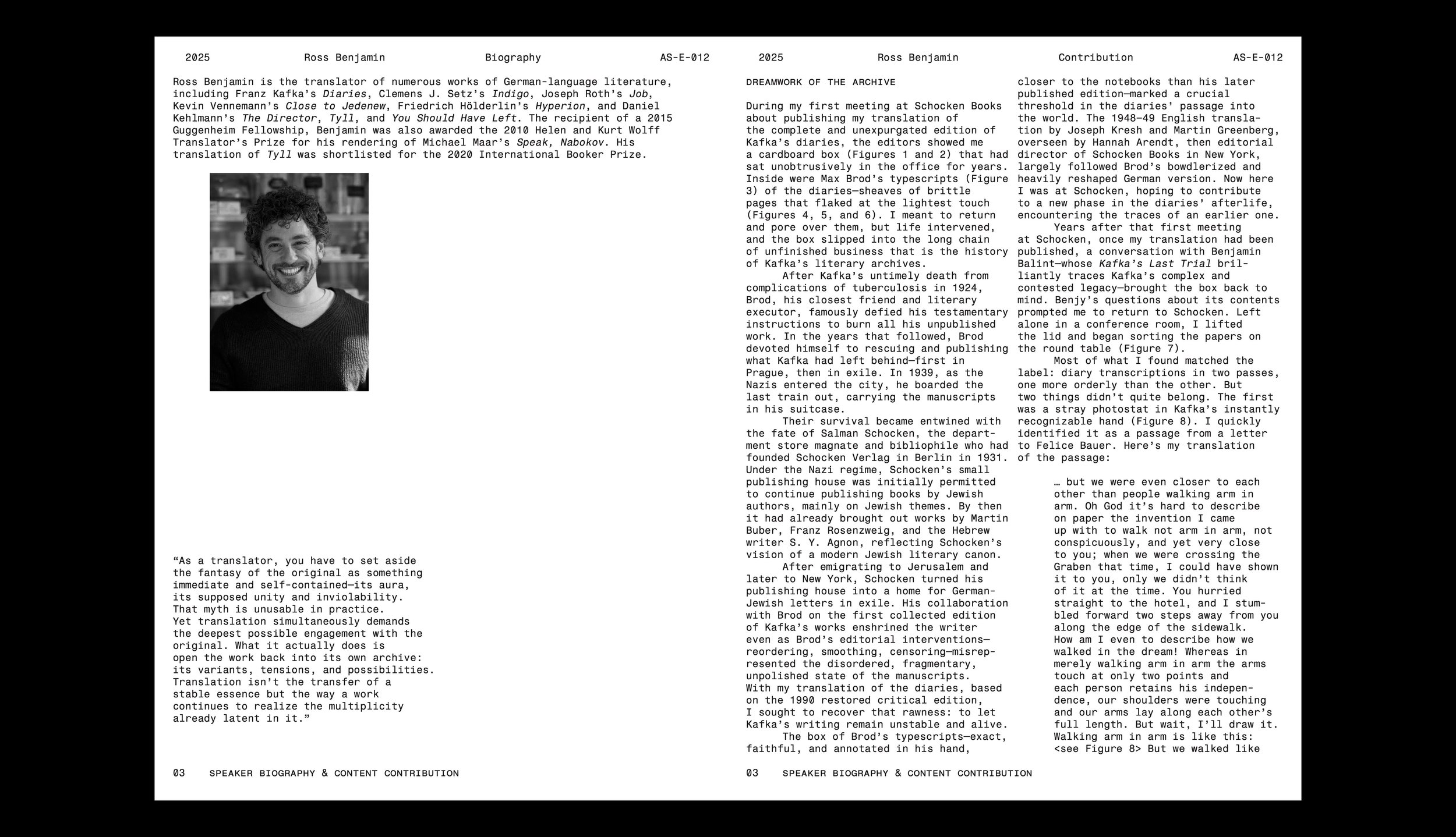
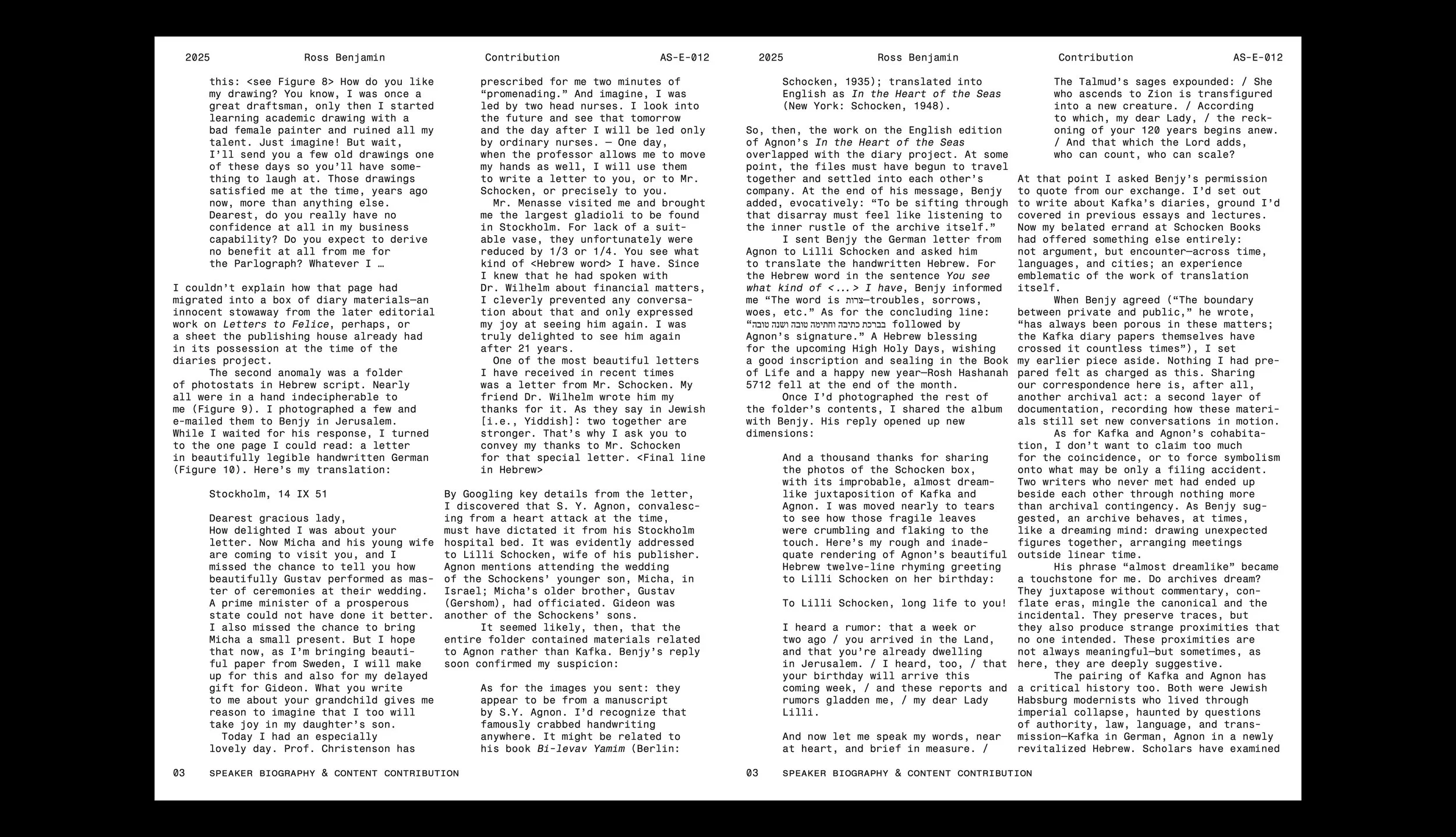
Ross Benjamin, Translator of The Diaries of Franz Kafka
“I think that they're entering my subconscious, maybe. So maybe it will literally have to be determined how they affect me, because I haven't had dreams about her yet. But I do imagine that will happen, with her voice being there.” —David Walker
“One of the things I love about being in the archive is how physical it feels. Whereas writing so much of the time feels like it mostly occupies the intellect. Here is a space where I can do research and get to intimately know the subject through the objects and papers that they've left behind—through touch and scent and sound. And so it feels very embodied to me, feels very present, very physical.” —Samantha Rose Hill
“The more I got into it, the less I felt I could know Kafka, or that he was knowable. But not in some special Kafkaesque way—like he's a particularly ambiguous, mysterious figure—but in some way where probably if you go up to anybody's intimate writings, you would probably find a lot of that "knowing" relationship to them undone.” —Ross Benjamin
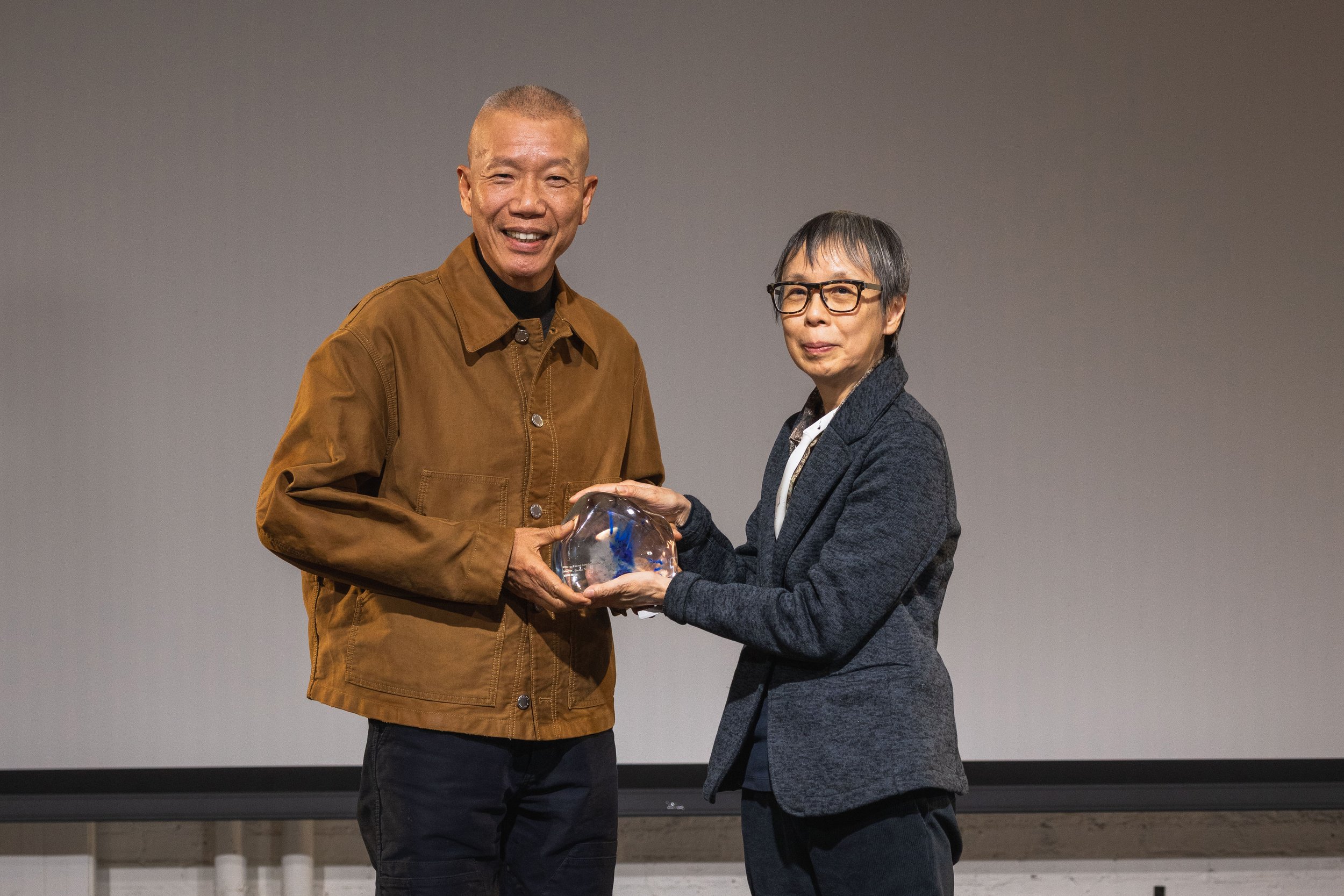
Photo by Mengjia Zhao, courtesy Cai Studio
2025 Archival Contribution Award: Individual Award
Award Presenter: Cai Guo-Qiang; Translator: Sang Luo
Recipient: Dr. Reiko Tomii
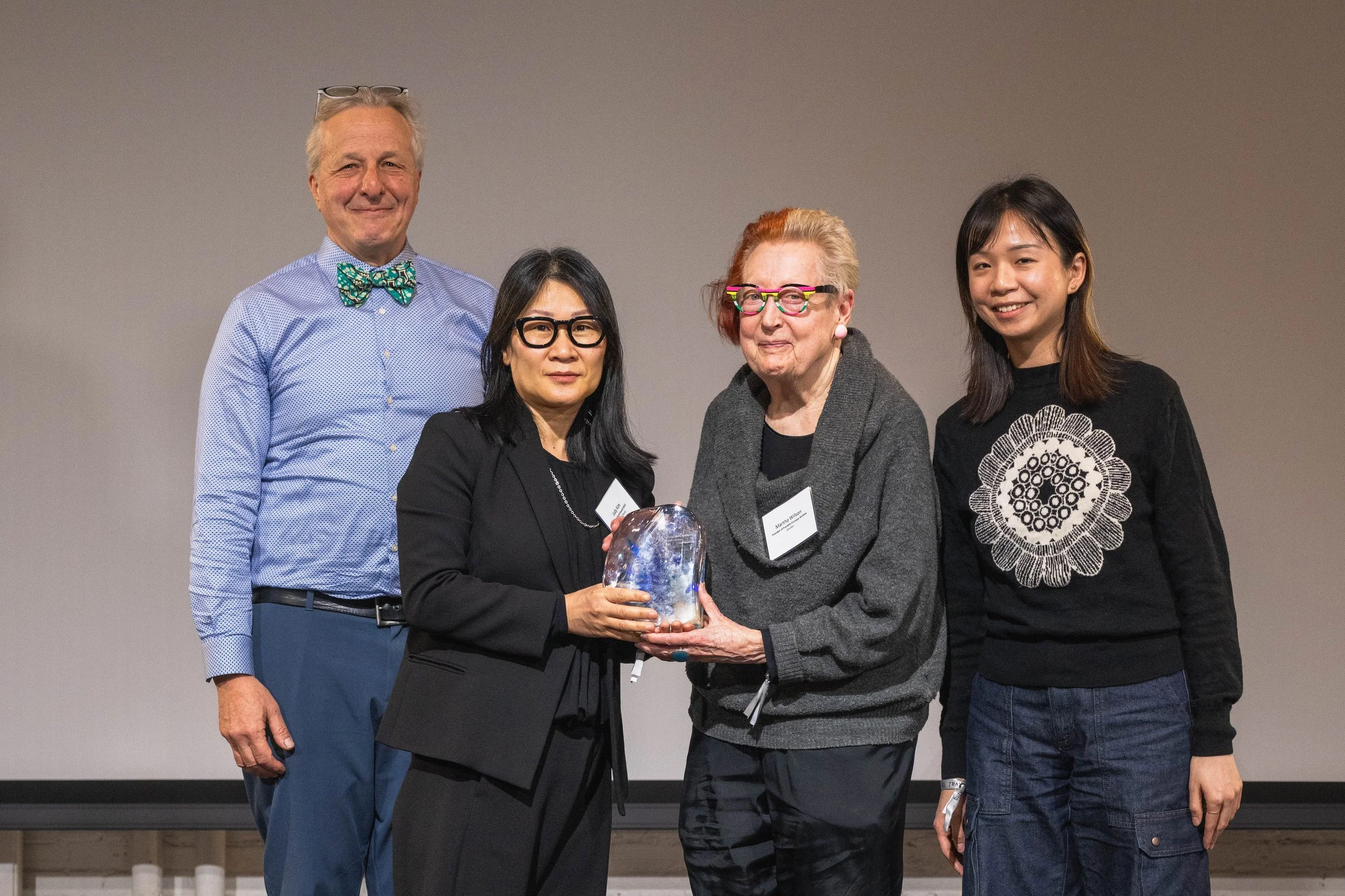
Photo by Mengjia Zhao, courtesy Cai Studio
2025 Archival Contribution Award: Organizational Award
Award Presenter: Judy Kim
Recipient: Franklin Furnace (Martha Wilson, Harley Spiller, and Fang-Yu Liu)
Symposium Trailer
Trailer of Archival Thinking: Artist Archive Symposium.
Producer: Zijian Wang. Camera: Zijian Wang, Haruna Azumi. Gaffer: Shota Takei. Editing: Zijian Wang.
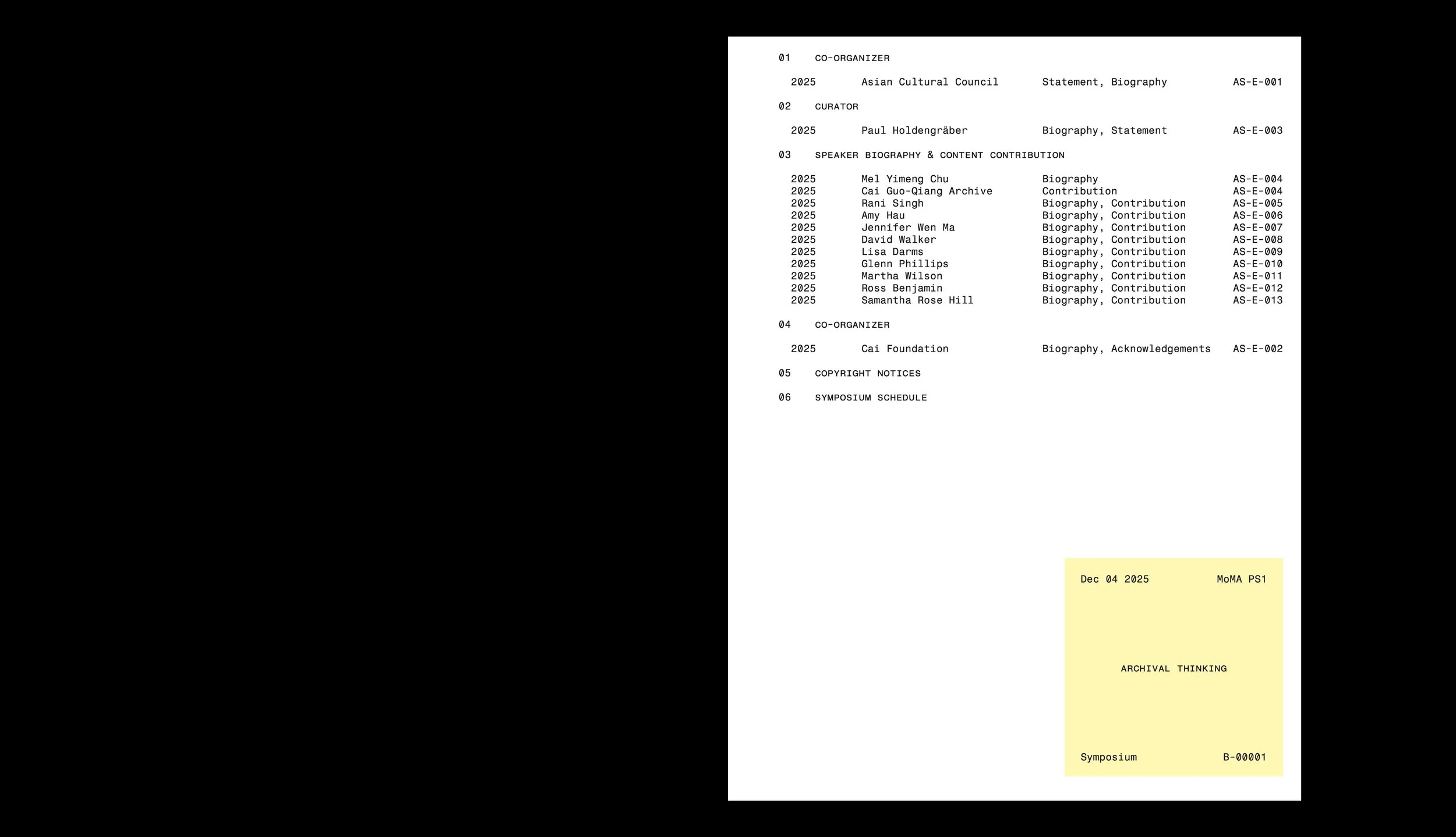
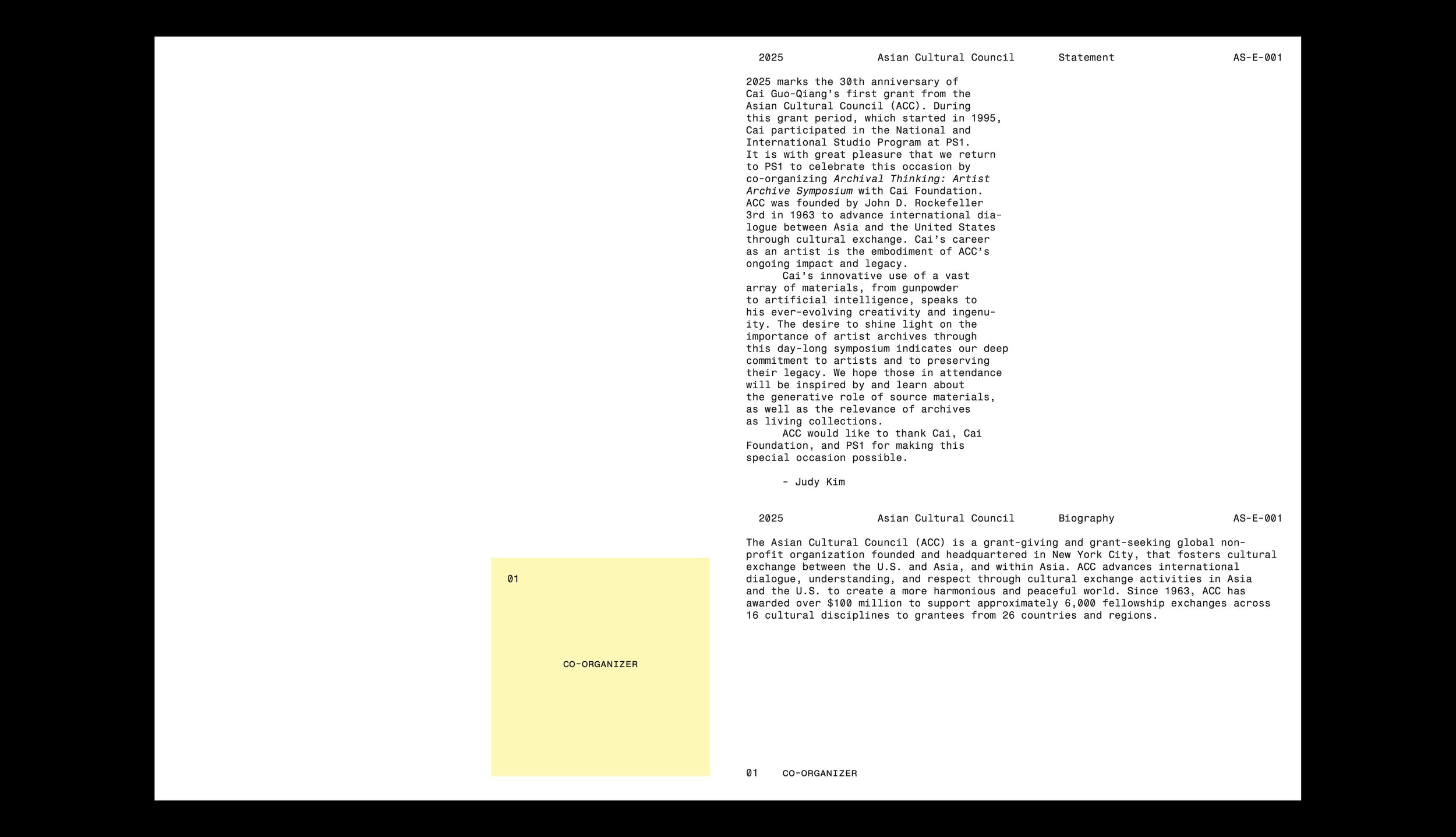
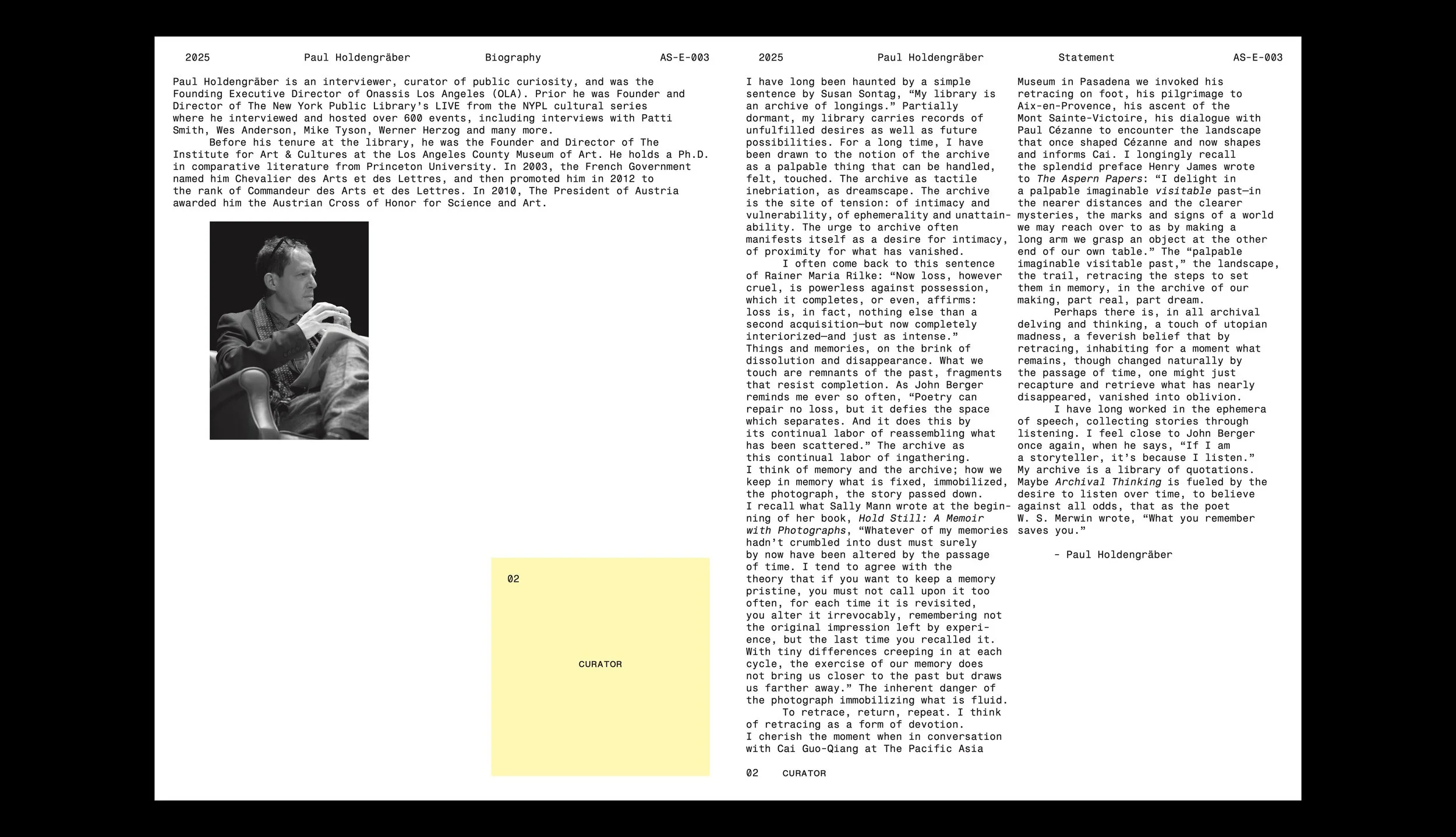
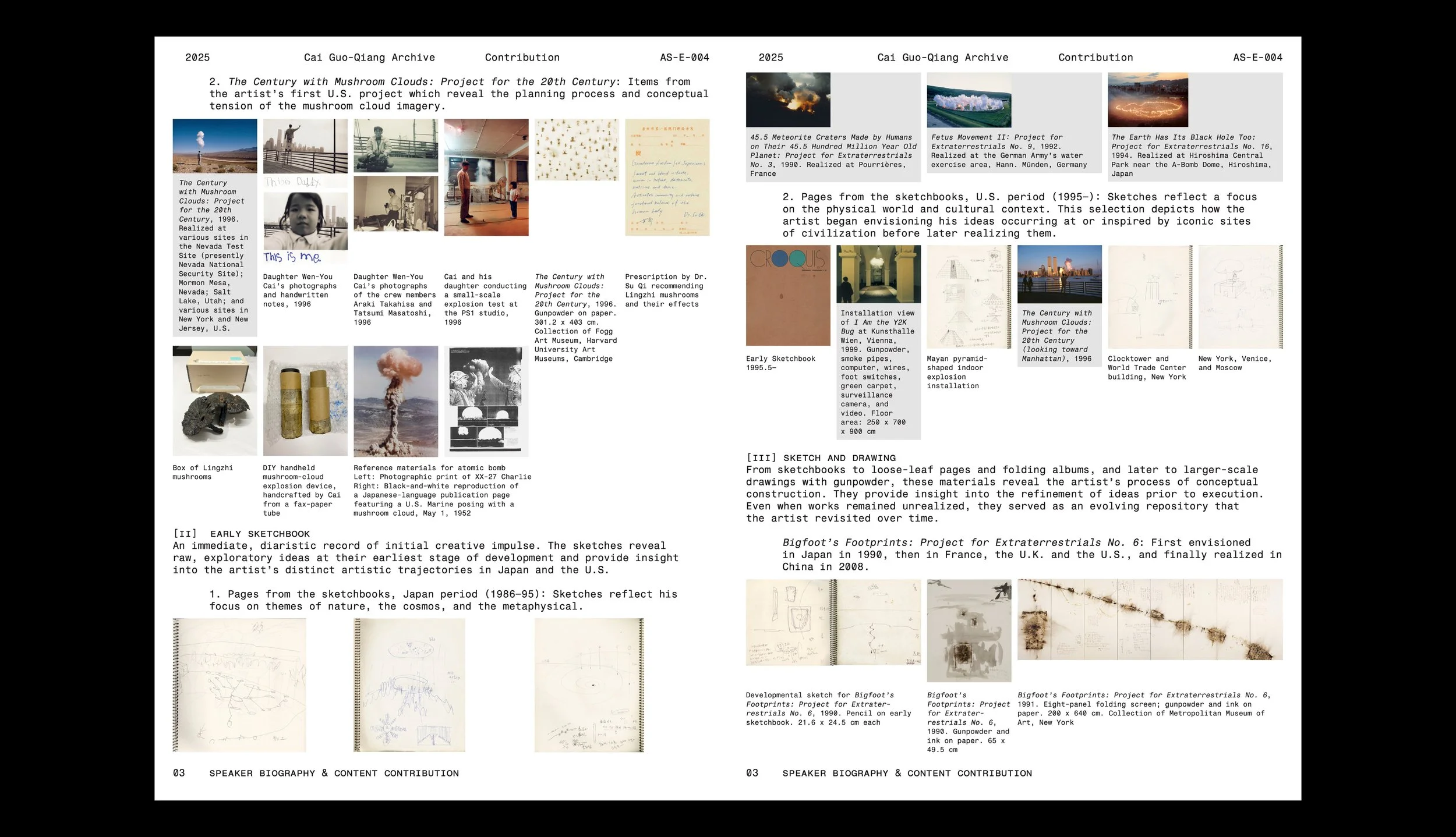
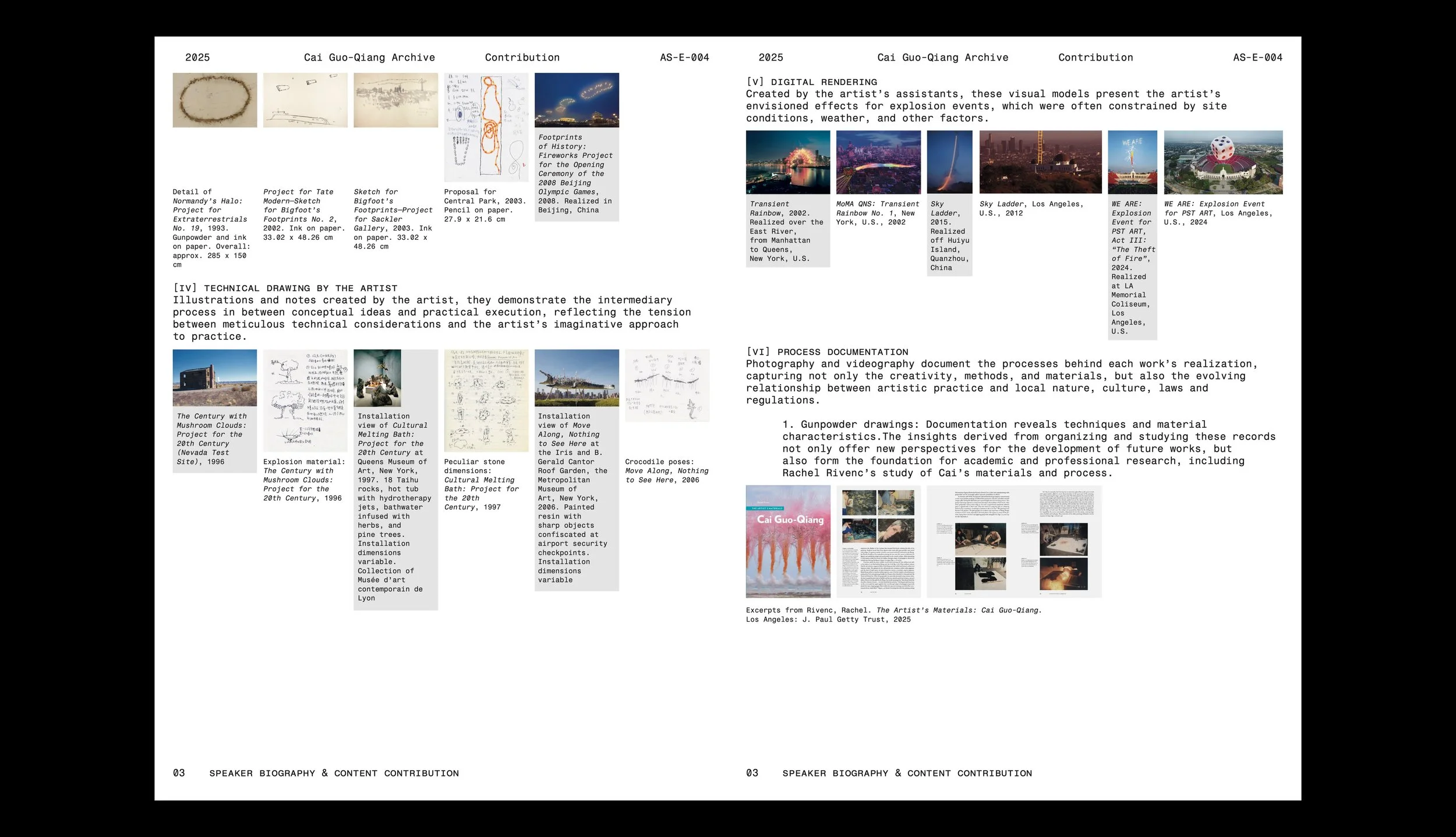
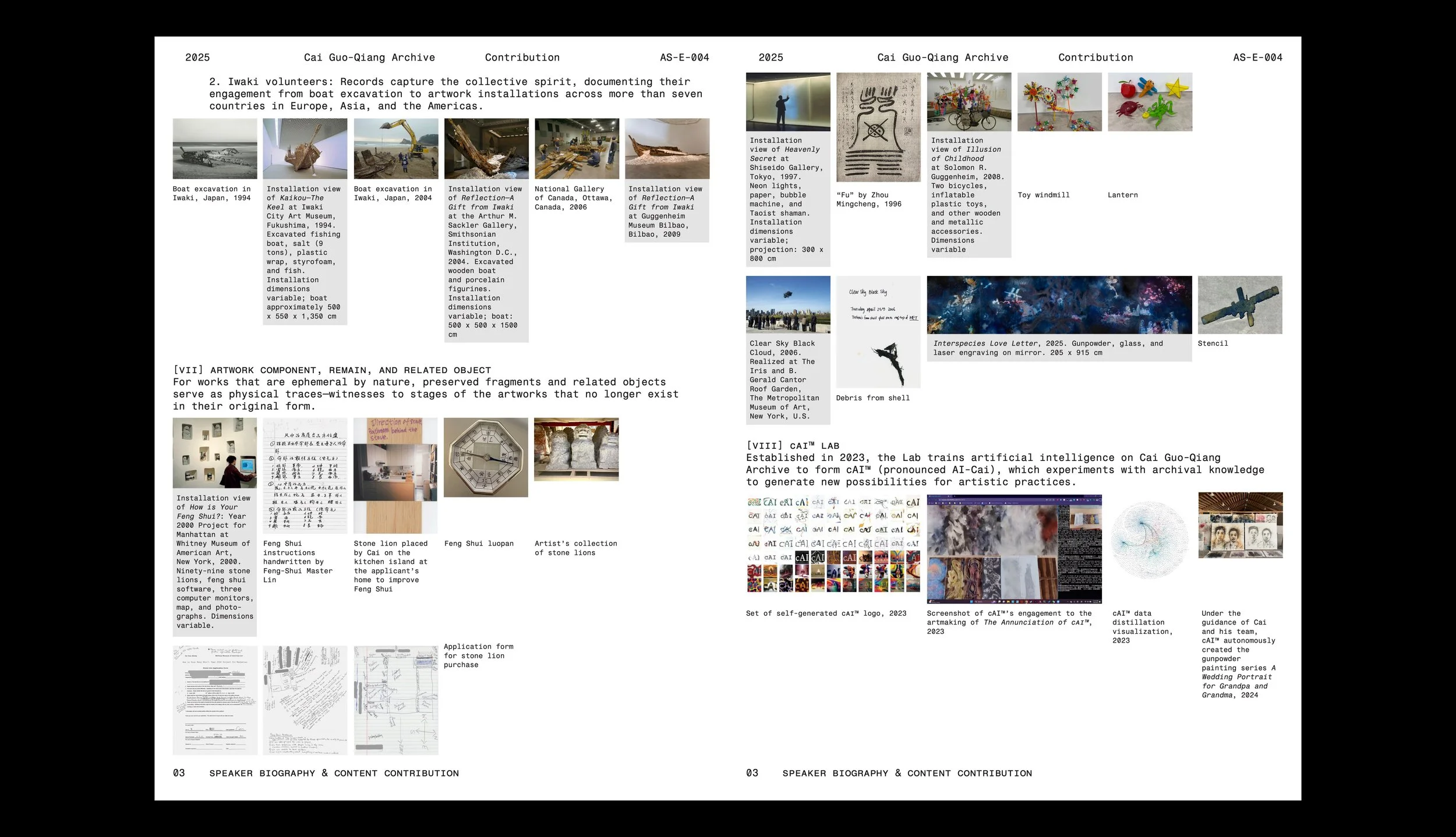
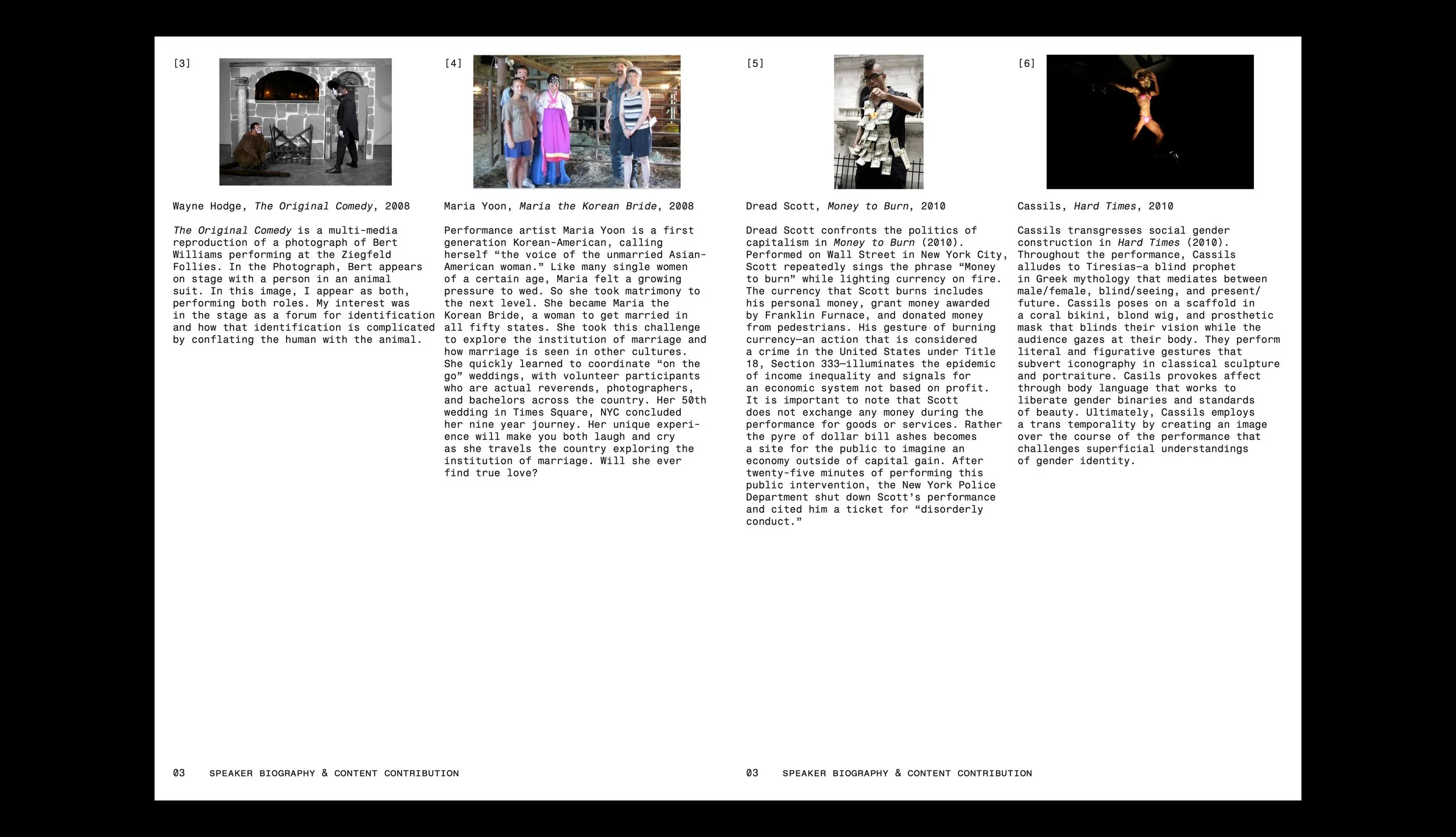
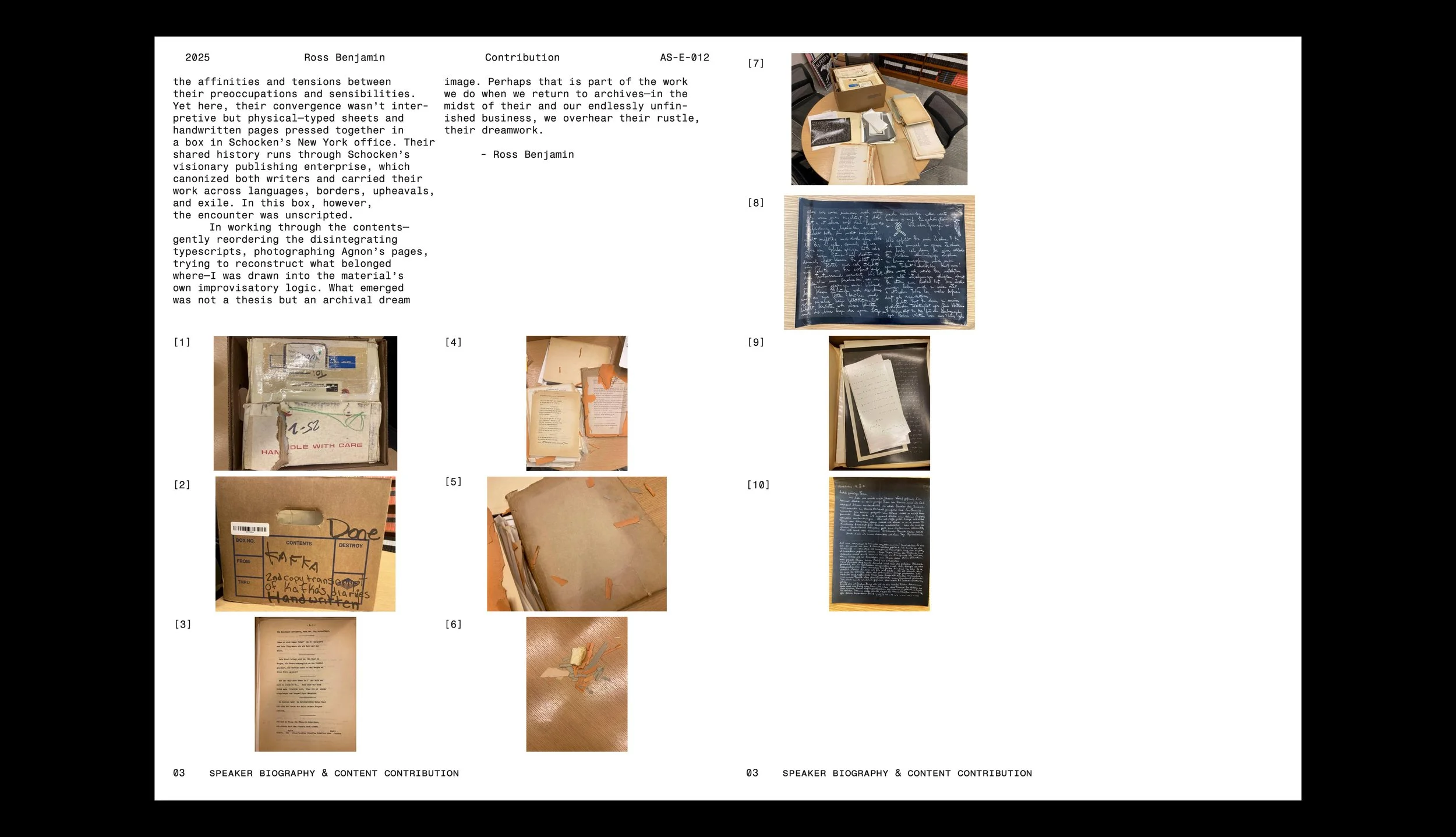
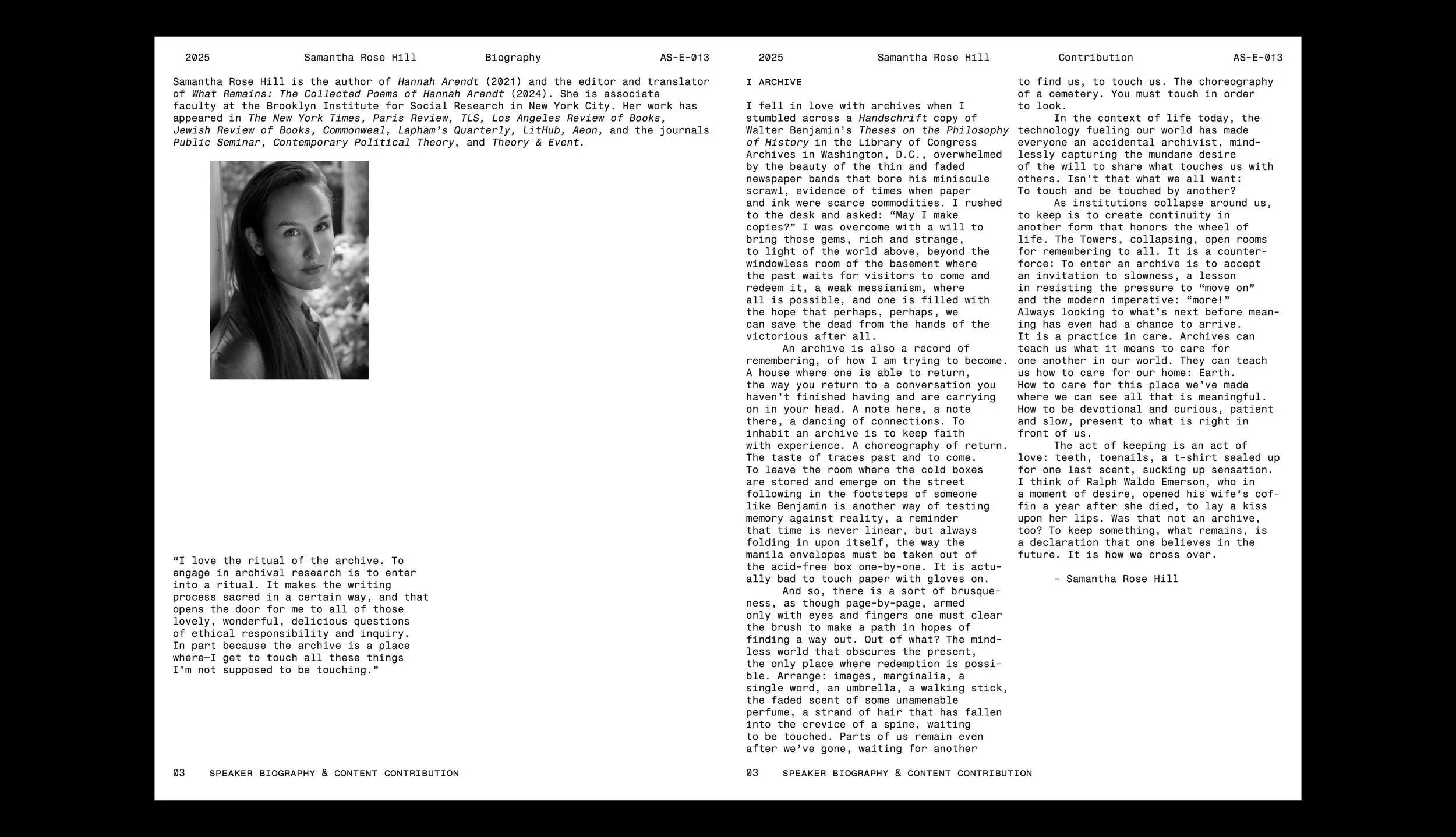
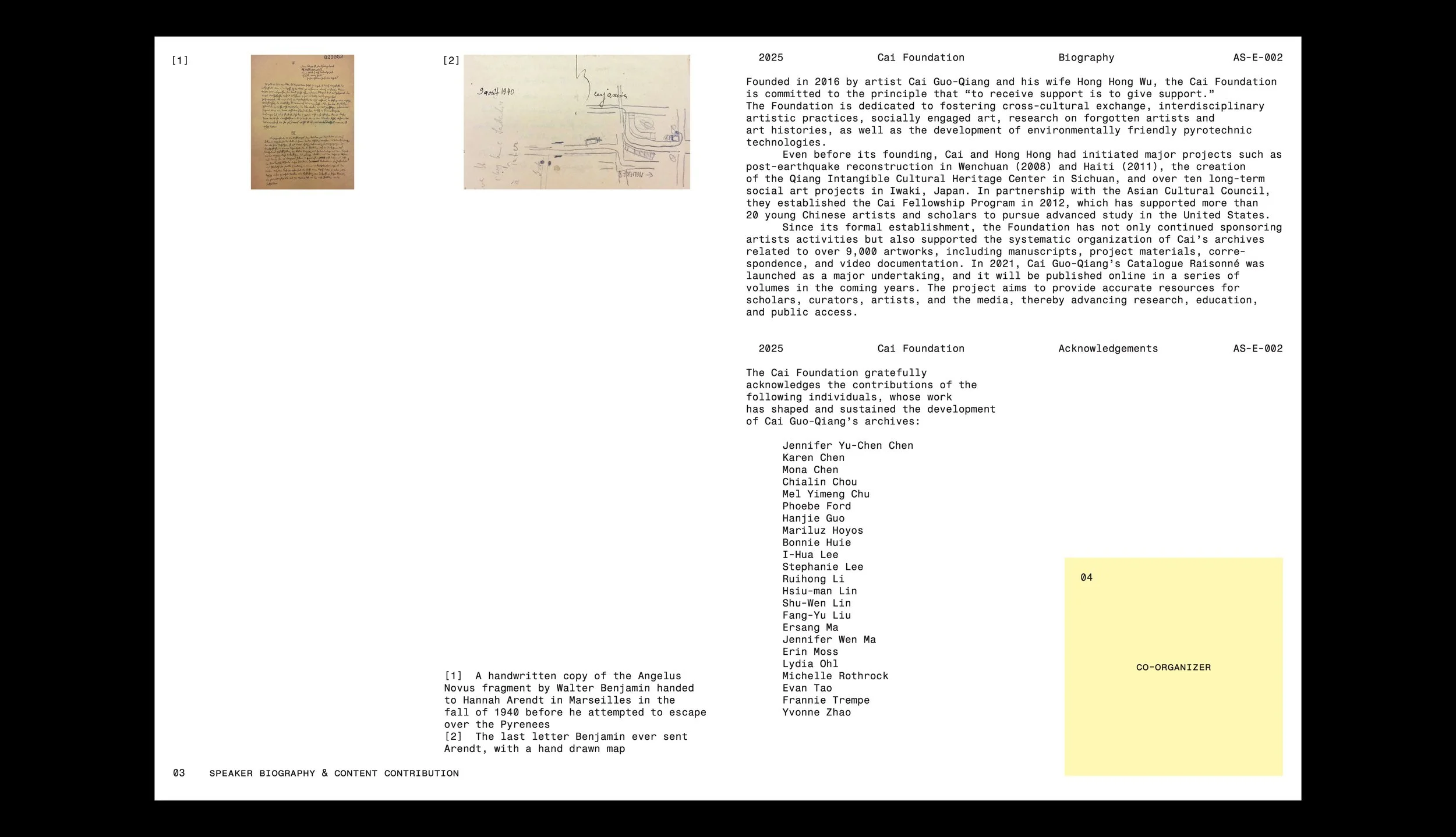
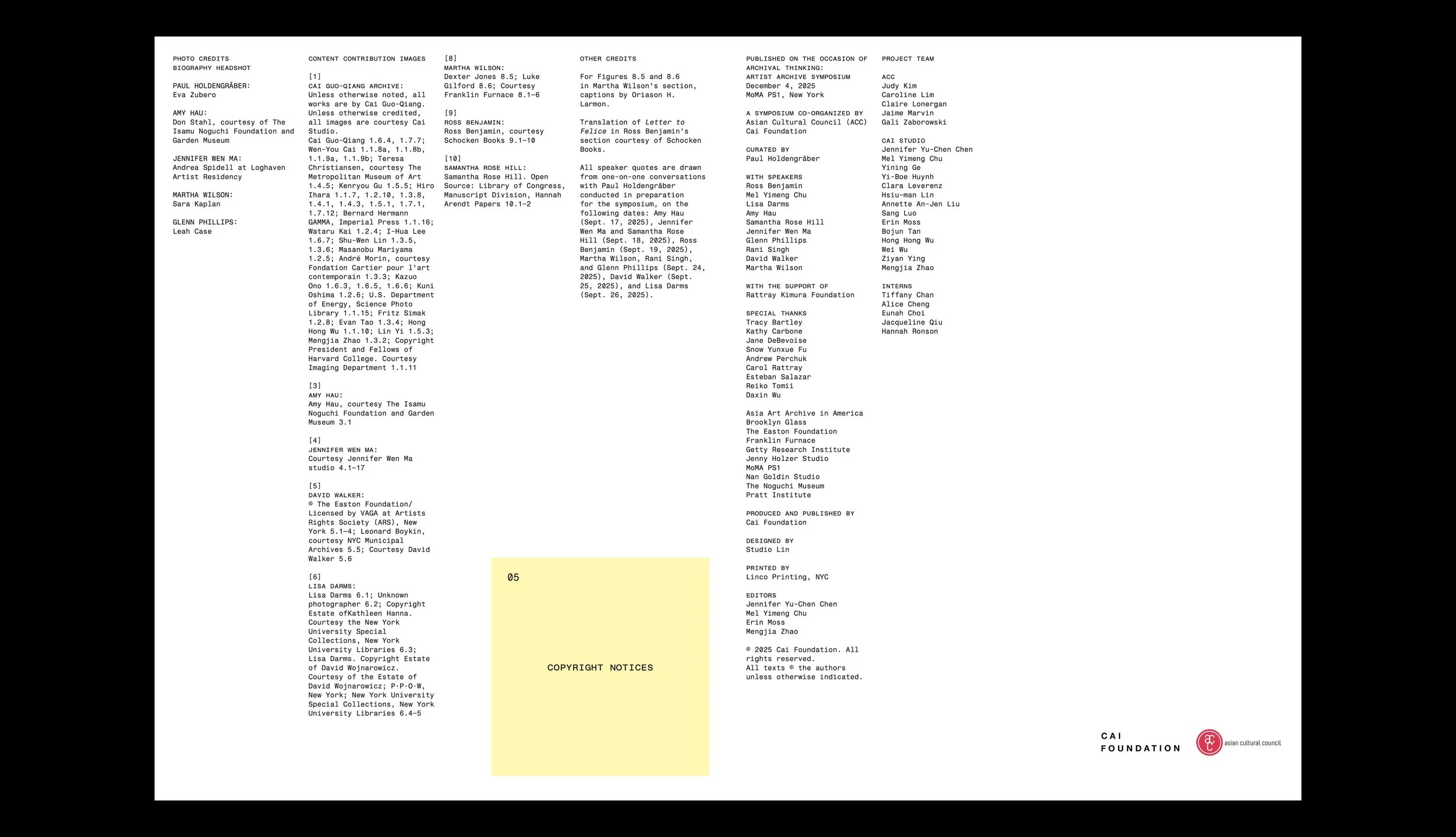
Digital Publication
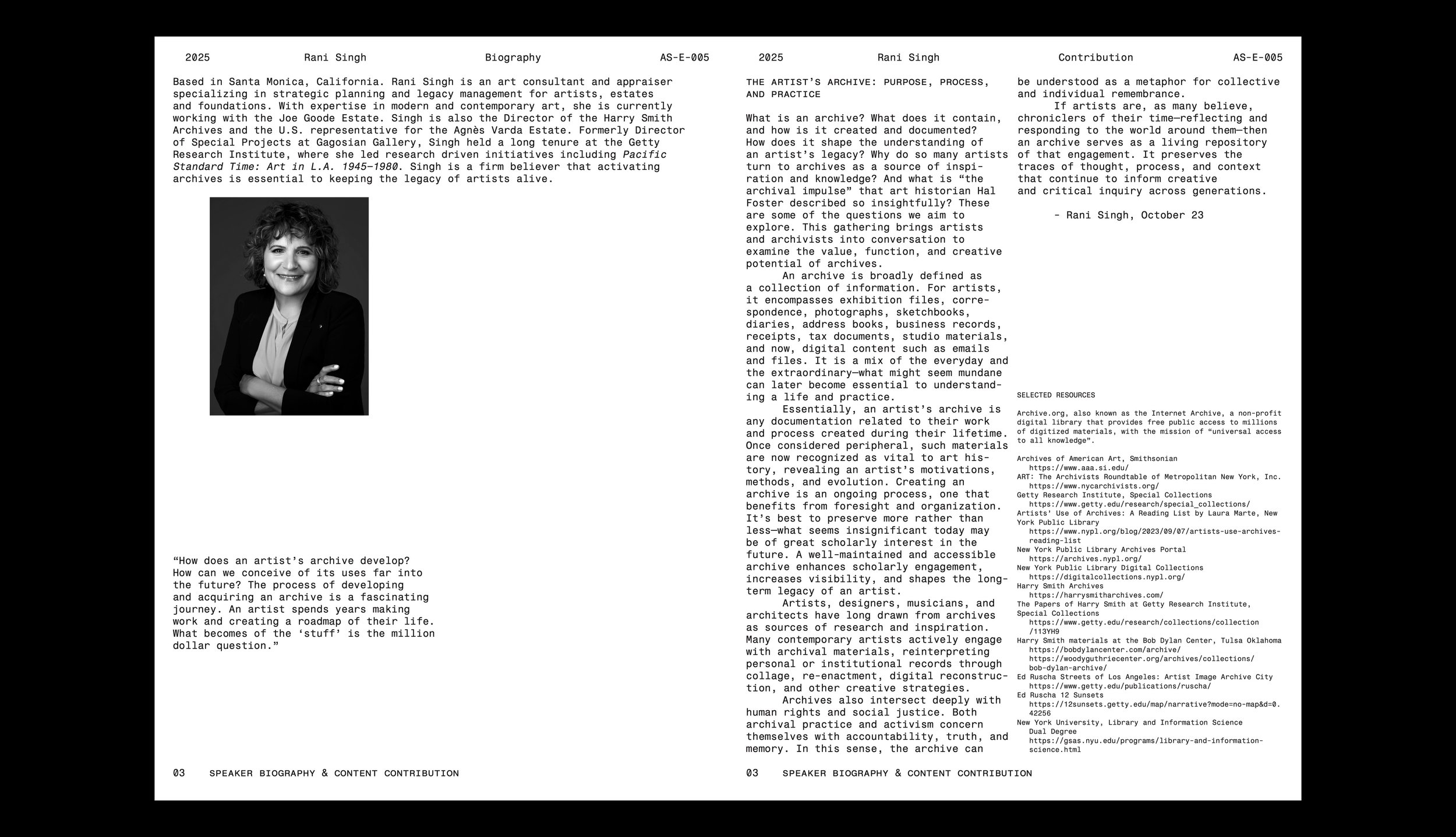
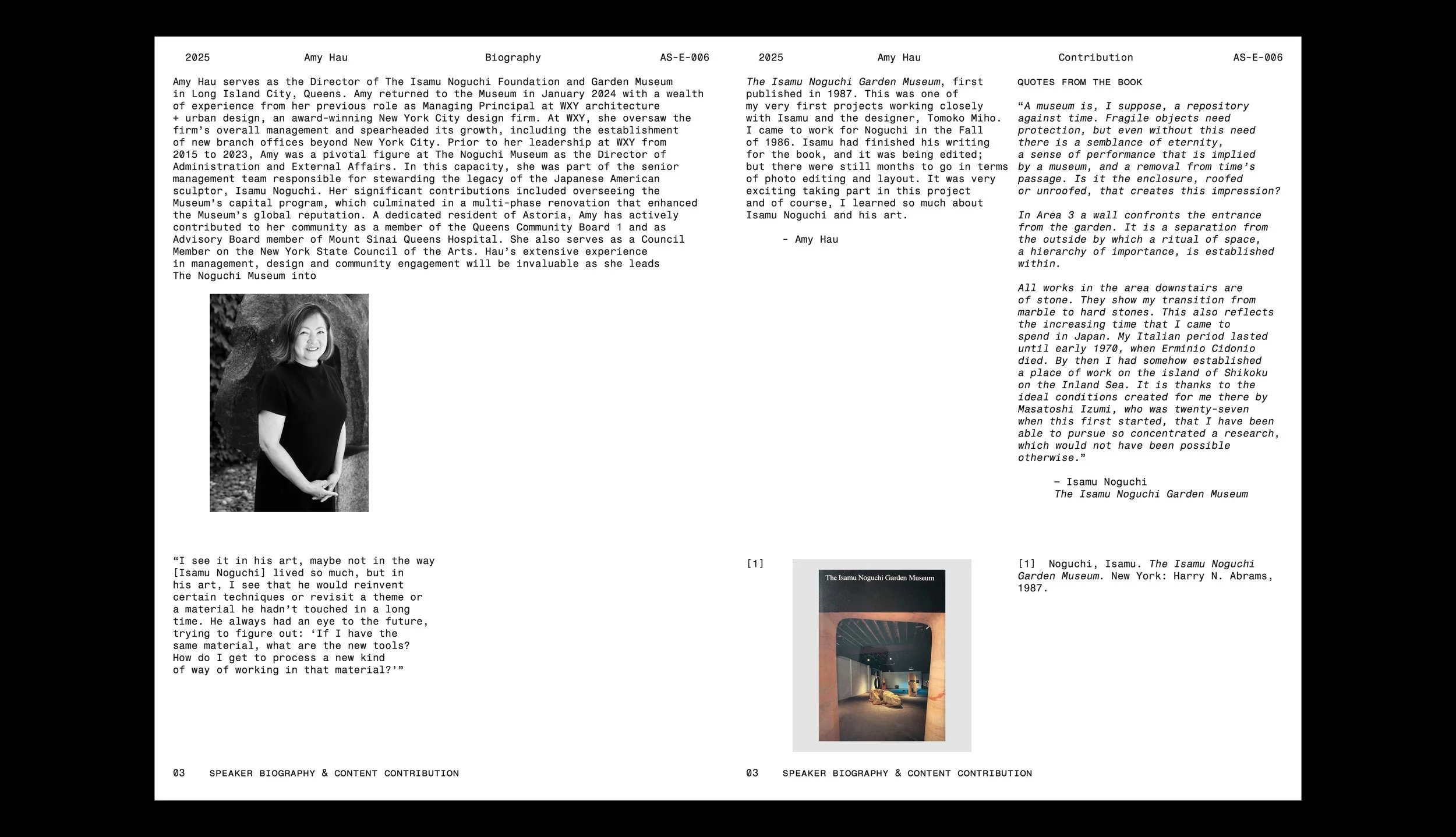
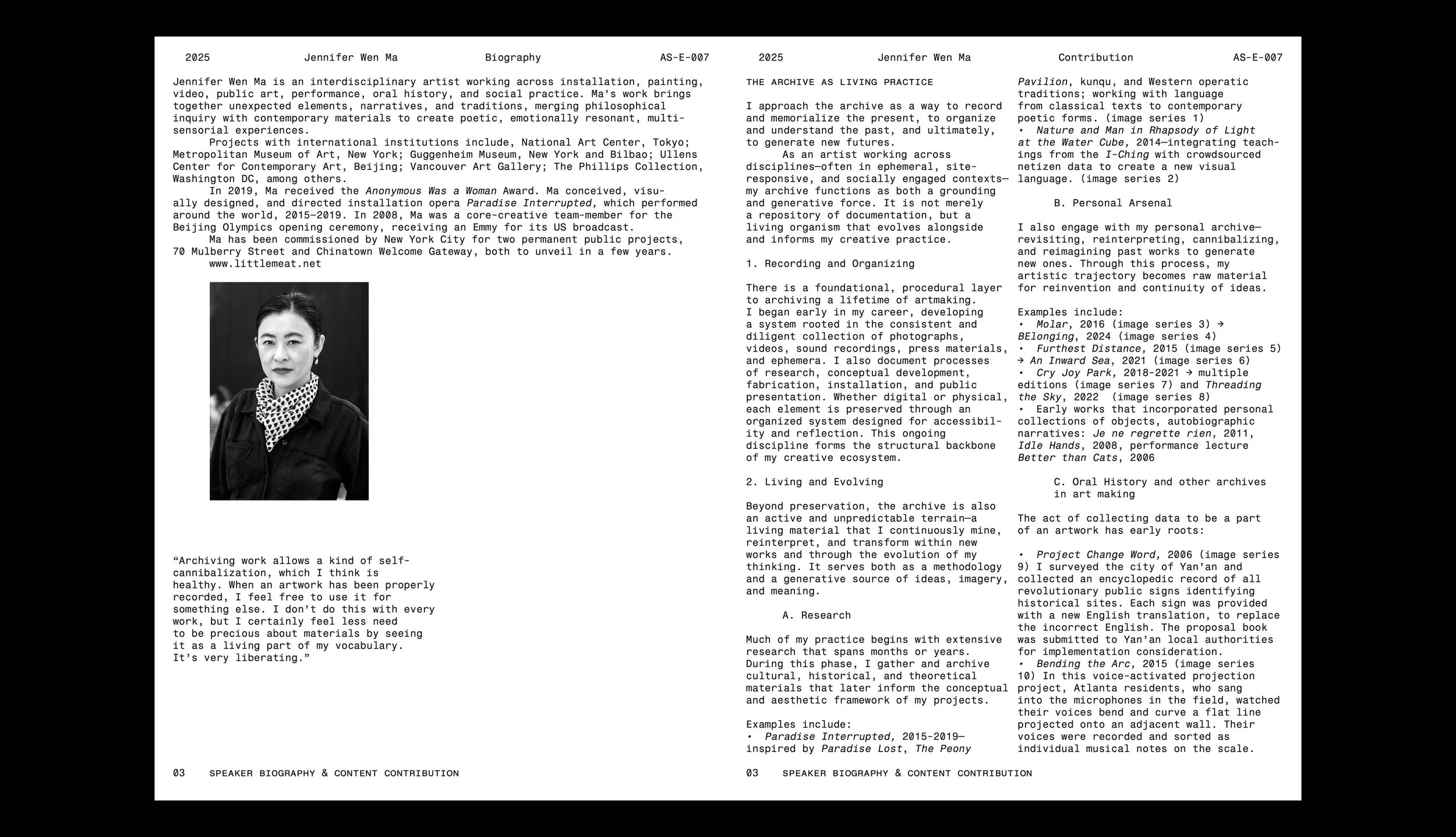
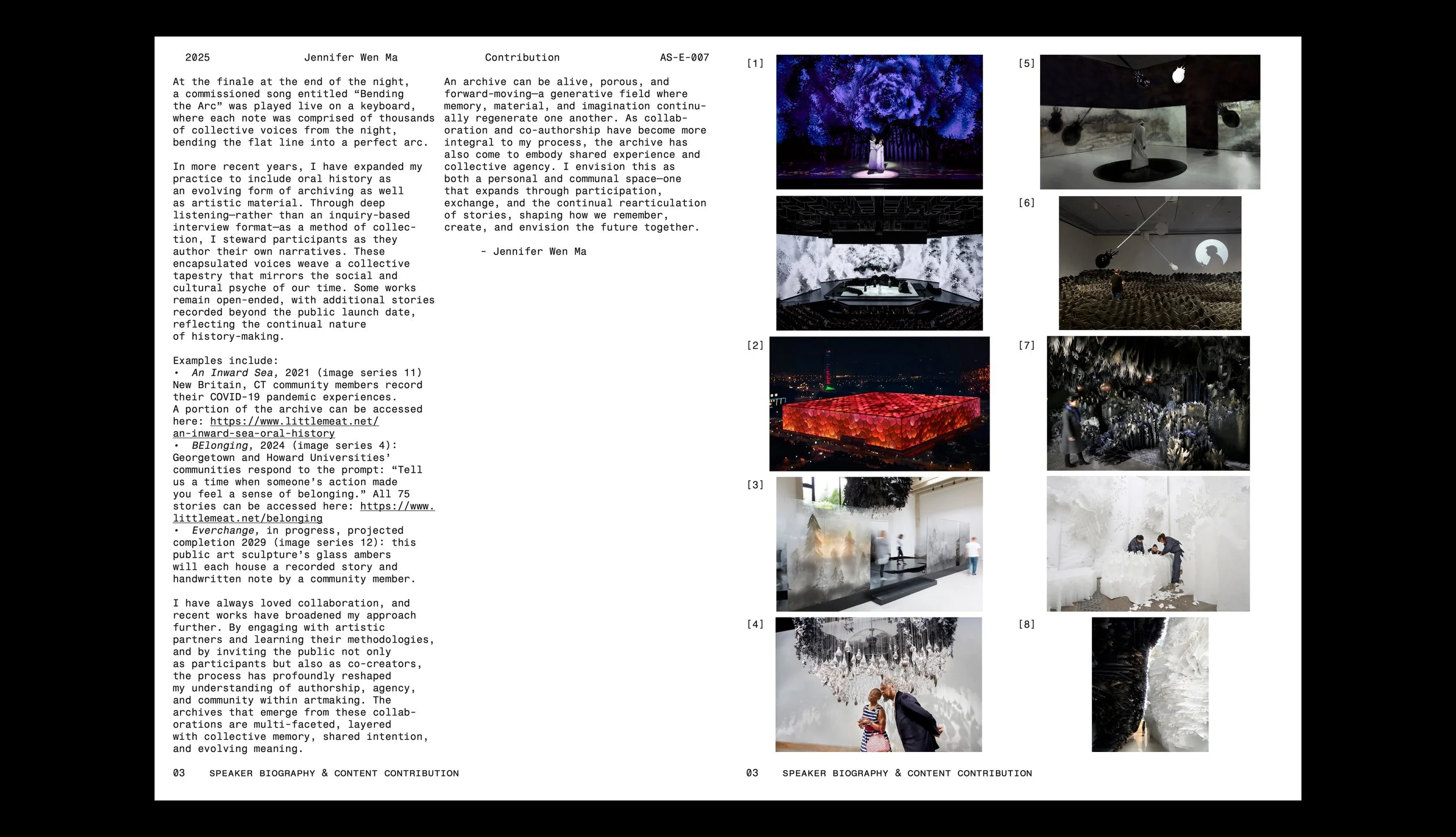
Merchandise
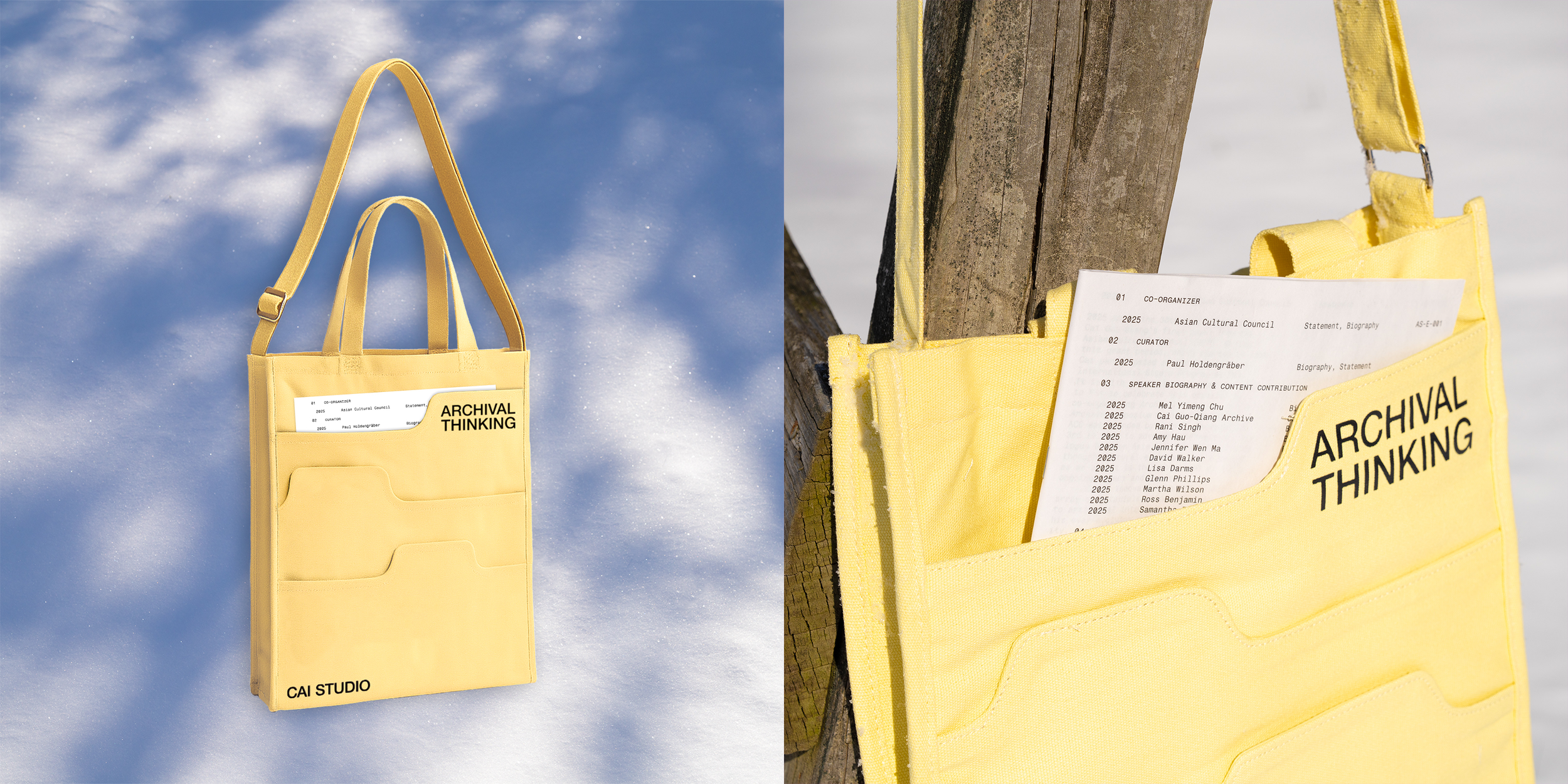
Exclusive edition for Archival Thinking: Artist Archive Symposium available online. Purchase now.
Link
[CS Newsletter] When Artist Archive Becomes a Method